
Orthodontic Blog
Can You Switch Orthodontists in the Middle of Braces Treatment Without Starting Over?
Yes. In almost every case you continue braces from where you are, not from zero. A new orthodontist reviews your records and picks up your treatment plan.

- Dr. Boris Pinhasov, DDS
- July 26, 2026
- 10:00 am
Medically reviewed by Boris Pinhasov, DDS - American Board of Orthodontics Diplomate | 15+ Years Experience | Last Updated: July 2026
Yes. In almost every case you pick up your braces from where they are now, not from scratch. A new orthodontist reviews the records from your old office, checks how far your teeth have already moved, and continues your treatment plan toward the same finish line.
Moving partway through braces feels like it should reset the clock. It usually does not. Orthodontists treat transfer patients as a routine part of practice, and the entire point of the handoff is to protect the months you have already put in.
How Switching Orthodontists Actually Works
The transfer is more paperwork than treatment, and a few steps keep it smooth.
Tell your current orthodontist early. Once they know you are relocating, they can prepare your records and, if the office uses one, an American Association of Orthodontists transfer form that summarizes your case for the next provider.
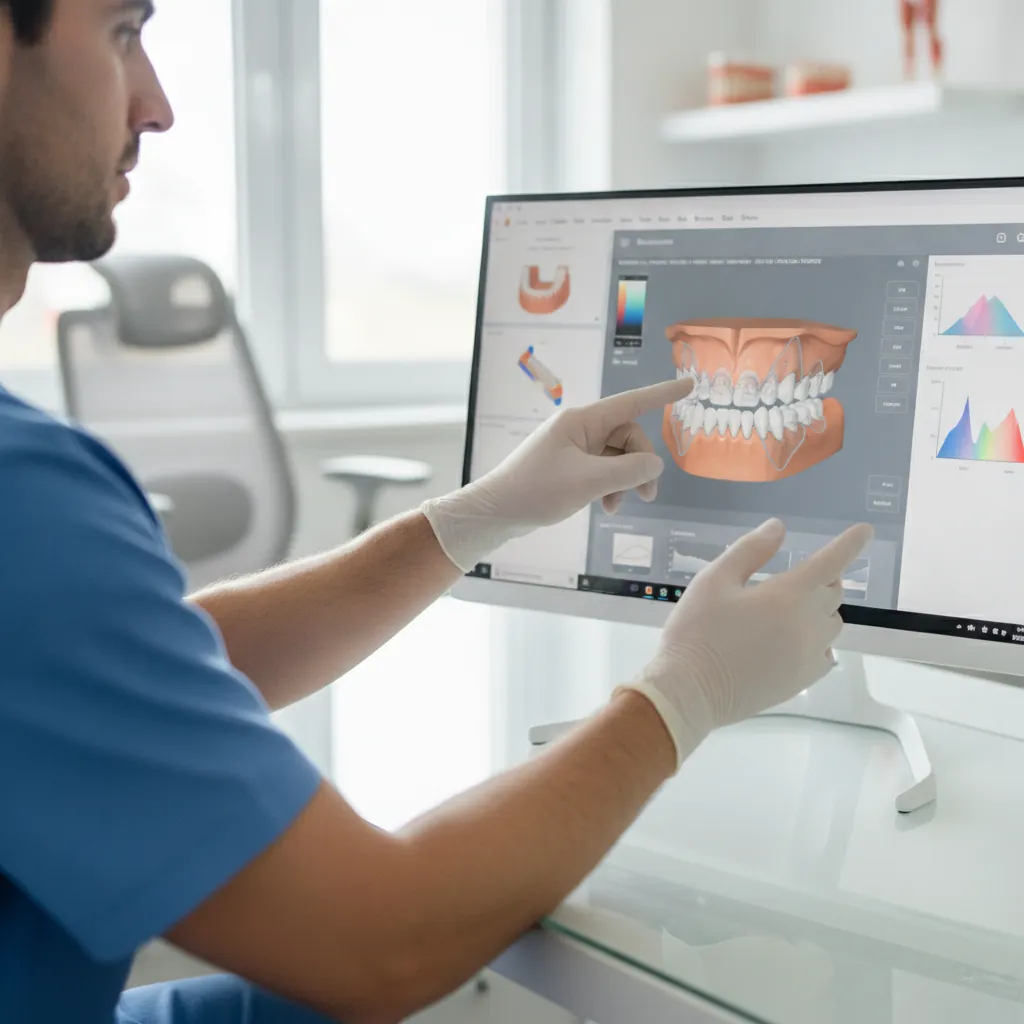
Choose a new orthodontist who takes transfer patients and offers your treatment. Then book a consultation and say up front that you are transferring, so the office can pull your case together before you sit in the chair. At that visit the new orthodontist reviews your records, looks at how your teeth and bite have changed, and maps out how to carry your plan forward. The goal is to continue the treatment you have already started.
What Records You Need From Your Current Orthodontist
Your new orthodontist works from the same diagnostic picture your old one built, so the records are what make a clean handoff possible. Ask your current office for:
- Diagnostic X-rays and any panoramic or 3D imaging
- Digital scans or study models of your teeth
- Progress photos and treatment notes, including your original plan and where you are in it
- A description of the appliances you currently wear, down to the bracket and wire type
- The AAO transfer form if the office uses one, which also documents your financial arrangement
If any of that sounds familiar, it is the same set of orthodontic records taken when treatment first started. In many cases the two offices send these directly to each other, so you may not have to carry anything yourself. Having the file in hand lets the new orthodontist evaluate your case quickly instead of rebuilding it from zero.
Will You Have to Pay for Your Braces All Over Again?
This is the fear behind the whole question, and the short version is that you typically don't repay a full treatment fee. Practices structure this differently, so the details vary, but the usual pattern is that your original office refunds or credits the portion of treatment you didn't receive, while your new office charges only for the work that remains. You pay to finish.
Insurance works by its own rules. Orthodontic benefits often carry a lifetime maximum, and part of yours may already have been applied at the first office, so what transfers depends on how those benefits were billed. Reviewing your treatment agreement with your old office and confirming coverage with the new one before you commit is what keeps the money side clear.
At BP Smiles Orthodontics, the first consultation is free, and Dr. Pinhasov gives you a real price for finishing your treatment before you decide anything. The office verifies whether your insurance covers braces before your appointment and offers interest-free in-house financing tailored to each patient, so a transfer does not have to arrive as a lump sum.
What If Your New Orthodontist Uses Different Braces or Brackets?
Orthodontists have preferred systems, so your new one may keep the appliances you already wear or switch you to their own brackets or wires. Either way, the new hardware builds on the position your teeth are already in and picks the treatment up mid-stream. A different technique reflects how that office works, and it says nothing about the quality of your earlier care. Matching your appliances to the system the new orthodontist uses can also make the rest of treatment run more smoothly.
Dr. Pinhasov reviews your current appliances and bite at your consultation and tells you plainly what continues as is and what he would adjust, along with why. You leave knowing the plan.
Will Switching Set Your Treatment Back?
A transfer rarely adds real time. There is usually a short pause while your records are reviewed and the new plan is set, and then your adjustments resume on their normal schedule. At BP Smiles Orthodontics that cadence runs every four to six weeks, and you see Dr. Pinhasov himself at each visit rather than a rotating set of providers.
The bigger risk is waiting too long. Braces keep working between appointments, and teeth need steady monitoring to move as planned, so letting several months lapse while you settle into a new city can do more to stall your progress than the move itself. Line up a new orthodontist soon after you arrive rather than putting it off until the braces come off.
Continuing Your Braces at BP Smiles Orthodontics in Queens
Dr. Boris Pinhasov, DDS, is a board-certified orthodontist and a Diplomate of the American Board of Orthodontics. He earned his dental degree at the New York University College of Dentistry, where he graduated with honors. He treats children, teens, and adults, and consults patients in English, Russian, and Spanish.
If you have moved to Queens partway through braces or Invisalign, continuing your braces at BP Smiles Orthodontics starts the same way any transfer does: a free consultation where Dr. Pinhasov reviews your records, checks your progress, and lays out the plan and the price to finish. The office works with most plans that carry orthodontic benefits and offers interest-free in-house financing.
"I have been going to BP smiles since i was young to get my braces and they have been very pleasant. My teeth a perfect and they have great patient service."
Audrey Agbato
To start your transfer, call the office at (718) 290-9444. BP Smiles Orthodontics welcomes transfer patients from across Queens.
Ready to Start Your Smile Journey?
Schedule a free consultation with Dr. Boris Pinhasov in Queens.
FAQ
Frequently Asked Questions
Generally no. General dentists do not manage active braces or Invisalign treatment, so if you relocate mid-treatment it is best to find an orthodontist who can keep guiding your case.
Transfers happen at every stage, including the final months. Your new orthodontist evaluates how much movement is left and plans the steps needed to finish.
In many cases the two offices coordinate directly, with your old orthodontist sending X-rays, scans, photos, and treatment notes to the new one. Your new office can usually help you request them.
If you are moving, continue with an orthodontist rather than waiting. Regular adjustments keep your teeth moving as planned, and a gap in care is what tends to slow things down.
Disclaimer: This information is provided for educational purposes and is not a substitute for professional dental or medical advice. Please schedule a consultation with our team to discuss your individual needs.