
Orthodontic Services
Children's Orthodontics in Queens
A free first evaluation, and a straight answer about whether your child actually needs treatment yet. Most young kids just need monitoring, not braces, and we will tell you honestly which one your child is.
“Such a pleasant experience. The staff was so nice and the orthodontist was patient and so informative. Me and daughter had a wonderful experience.”


ABO Diplomate

Languages
English · Русский · Español
Free Consultations

Board-Certified Orthodontist
Orthodontist for Children in Queens, NY
BP Smiles Orthodontics treats children across Queens, led by Dr. Boris Pinhasov, DDS, board-certified by the American Board of Orthodontics. Every child's first visit is a complimentary evaluation: a full bite and alignment review, a panoramic X-ray if needed, and a one-on-one conversation with you about what we see and when (or whether) treatment makes sense.
Our office is set up for families: kid-friendly waiting area, gentle clinical pace, and consultations available in English, Russian, and Spanish.
Call (718) 290-9444 to schedule your child's first orthodontic evaluation.
About Children's Orthodontics
Children's orthodontics is the early phase of orthodontic care: evaluation, monitoring, and (when needed) interceptive treatment that takes advantage of a child's growing jaw and developing bite. The goal isn't to put braces on a 7-year-old. The goal is to catch alignment, bite, or jaw-development issues early so timing and treatment options are clearer when your child is ready.
The American Association of Orthodontists recommends a first orthodontic evaluation by age seven [1]. By that age, your child has enough adult teeth to give an orthodontist a useful picture of how the bite is developing. Most full treatment doesn't start at age seven; most cases begin around ages 11 to 13, when adult teeth have erupted and we can address alignment, bite, and aesthetics in one comprehensive course of care.
When an early intervention is genuinely useful, it can guide jaw growth, create room for adult teeth, or correct a bite issue before it becomes harder to treat later. Otherwise, we monitor your child at no charge until the right moment to begin treatment.
Benefits of Early Orthodontic Care
Bringing your child in by age seven, even if no treatment is needed yet, has real advantages:
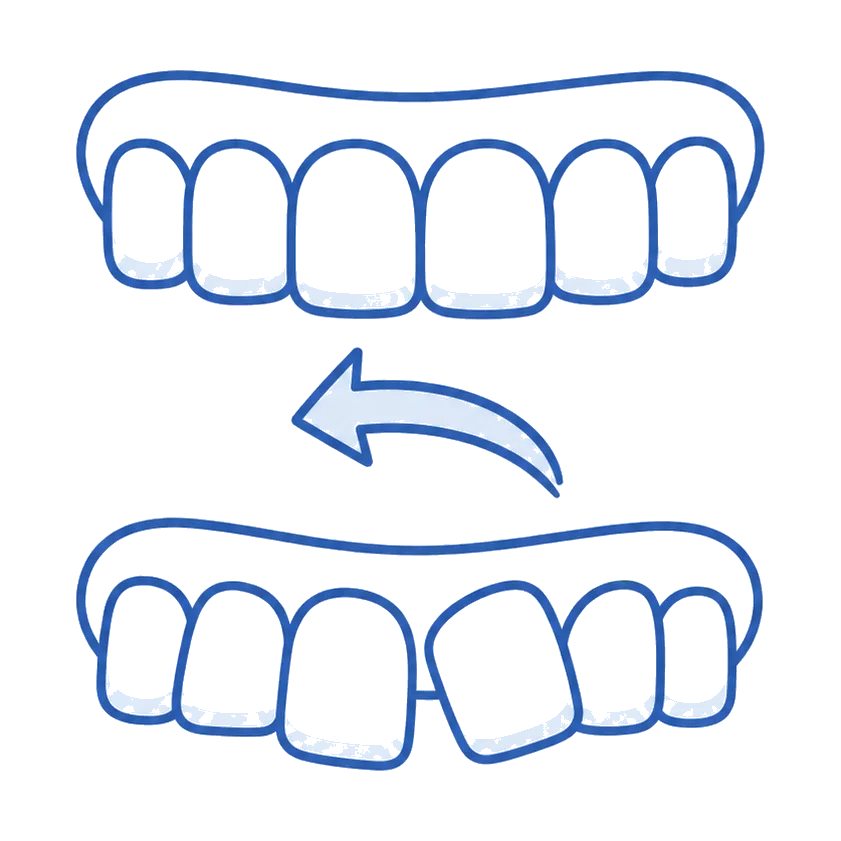 Catches issues early. Crossbites, severe crowding, jaw growth concerns, and habits like prolonged thumb-sucking are easier to address when bones are still developing.
 Helps the development of permanent teeth. Early evaluation lets us guide adult teeth into better positions as they erupt, reducing the need for extractions later.
 Avoids longer treatment later. When a small intervention now prevents a bigger problem later, comprehensive treatment in the teen years tends to be shorter and simpler.
 Sets a baseline. Even if no treatment is ever needed, we have a record of how your child's bite is developing, which helps if anything changes.
 Builds comfort with the dentist's chair. Kids who meet the orthodontist young are calmer when they come back for treatment as teens.
 Works around your child's schedule. First evaluations are short and complimentary; we can fit them around school and activities.
 No commitment. Most kids who come in at age seven walk out without braces. We monitor and check back when the time is right.
Ideal Candidates for an Early Orthodontic Evaluation
The American Association of Orthodontists recommends every child have a first orthodontic evaluation by age seven [1]. That recommendation applies to all kids, not just kids with visible problems. Bring your child in if:
- Your child is approaching or has turned seven and has not been evaluated yet
- You notice crowding, gaps, or crooked teeth as adult teeth come in
- Your child has an overbite, underbite, crossbite, or open bite
- Your child's upper and lower jaws don't seem to line up
- Your child has trouble chewing, has noisy or shifted jaws, or breathes through their mouth most of the time
- Your child sucked their thumb or used a pacifier past age four and you're unsure whether it affected their bite
- Your child lost baby teeth very early or very late
- Your family dentist has flagged a concern and recommended an orthodontic opinion
- Your child plays a contact sport and you want a fitted mouthguard alongside an evaluation
Some situations need a different specialist first. Active gum disease should be addressed by your family or pediatric dentist before orthodontic treatment begins. Untreated cavities should be filled first. If your child needs a pediatric dentist for routine cleanings or restorative work, we'll refer you to a trusted local provider.
Preparing for Your Child's First Visit
First orthodontic visits are short and low-pressure. A few small things help:
- Talk to your child first. Let them know it's a "look around" visit, not a "fix something" visit. Most kids leave without anything done that day.
- Bring prior dental records if you have them. Recent cleaning notes or X-rays from your family dentist save us from duplicating imaging.
- Bring your insurance card. We'll verify orthodontic benefits in case treatment becomes appropriate down the line.
- Plan a snack after. Some kids associate dental visits with hunger or nerves; a treat afterwards keeps the visit positive.
- Allow 30 to 45 minutes. That's enough time for the evaluation, X-ray if needed, and a parent conversation.
- Bring your questions. "Is this normal?" "Will my child need braces?" "How long?" "How much?" All fair game.
The Evaluation Process
Your child's first visit moves through three phases.
Greeting and intake (10 minutes). A team member walks you and your child through the office, explains what's about to happen, and reviews your child's dental and medical history with you.
Clinical evaluation (15 to 20 minutes). Dr. Pinhasov examines your child's teeth and bite, looks at how the upper and lower jaws come together, and notes any spacing, crowding, or developmental concerns. If a panoramic X-ray will help (most kids this young need one to see how adult teeth are positioned), we take it now. The X-ray is fast and uses minimal radiation.
Parent conversation (10 to 15 minutes). This is where Dr. Pinhasov explains what he sees, in plain language, with your child included. You'll learn:
- What's normal for your child's age
- Whether anything needs treatment now (uncommon at age seven)
- What we'd want to monitor over the next few years
- When to come back: 6 months, 12 months, or when adult teeth have fully erupted
If treatment is recommended, we book a follow-up to walk through options, timelines, and pricing in detail. There's no commitment that day.
After Your Child's Visit
Most kids walk out of the first evaluation without anything done that day. Here's what typically happens next:
- Monitoring path (most kids). Dr. Pinhasov flags what to watch for and we book a check-back, usually 6 to 12 months out. Monitoring visits stay complimentary until treatment becomes appropriate.
- Early/interceptive intervention path (some kids). If a small intervention now will save complexity later (for example, a palatal expander to widen the upper jaw or a partial appliance to manage a crossbite), we walk you through what's involved, the timeline, and the cost. Phase-1 treatment is usually 6 to 18 months.
- Comprehensive treatment recommended (less common at age seven). If full braces or aligner treatment is appropriate now, we book a longer planning visit to discuss bracket options (metal, ceramic, lingual) or Invisalign Teen and provide a detailed quote.
- Refer out (some cases). If your child needs work outside our scope (pediatric dentist for restorative care, oral surgeon for tooth extractions, periodontist for active gum disease), Dr. Pinhasov coordinates the referral and timing.
No matter which path applies, we send a written summary home with you so you have everything in front of you.
Results and Long-Term Care
The point of starting orthodontic care early isn't to finish early. It's to make whatever treatment your child eventually needs simpler, shorter, and more predictable.
What success looks like:
- For kids on the monitoring path: baby teeth fall out, adult teeth erupt where they should, the bite develops normally. Many kids never need braces at all. We close the file when comprehensive treatment is no longer indicated.
- For kids who get phase-1 (interceptive) treatment: the specific issue (a crossbite, a crowding pattern, a jaw-growth concern) is corrected or stabilized. Phase-2 treatment in the teen years (if needed) is often shorter and less complex.
- For kids who go straight to comprehensive treatment: typical braces or Invisalign Teen treatment runs 12 to 36 months, after which a retainer holds the result. Retainer wear is essential for life; teeth always want to drift back.
The earlier we have a record of how your child's bite is developing, the easier every subsequent decision becomes. That's the long-term value of an age-seven evaluation, even when no treatment ever follows.
Corresponding & Complementary Services
Children's orthodontic care often connects to other services we offer:
- Interceptive orthodontics covers phase-1 treatments that take advantage of a child's growth (palatal expanders, partial appliances, space maintenance).
- Traditional braces for the comprehensive treatment phase, usually starting around ages 11 to 13. We offer metal, ceramic, and lingual options.
- Invisalign clear aligners for kids and teens who are good candidates for removable aligners. Invisalign Teen has compliance indicators that track wear time.
- Orthodontics for teens covers braces, aligners, and timing considerations specific to growing patients in their pre-teen and teen years.
- Schedule a complimentary consultation to book your child's first evaluation directly online.
If your child needs care outside our scope, we coordinate referrals: pediatric dentists for routine care and restorative work (fillings, sealants), oral surgeons for tooth extractions, and periodontists for any active gum-disease care that needs to happen before orthodontic treatment.
Cost of Children's Orthodontics in Queens, NY
Cost depends on what your child actually needs, which is different for every patient. Here's how it breaks down at BP Smiles:
First evaluation: complimentary. Every first orthodontic visit at our Queens office is free, including the initial X-ray if Dr. Pinhasov decides one is needed.
Ongoing monitoring (if no treatment is recommended yet): complimentary. Check-back visits stay free until comprehensive treatment becomes appropriate.
Early or interceptive (phase-1) treatment: pricing varies by the specific appliance and treatment length. After Dr. Pinhasov evaluates your child, you'll get an exact quote in writing before anything begins.
Comprehensive braces or Invisalign treatment (typically beginning around ages 11 to 13) at our Queens office is priced based on your child's case, set at the free consultation depending on case complexity and bracket type. The full quote includes routine adjustment visits and your child's first set of retainers at the end.
Financing: Payment options are discussed at consultation and tailored to each family's budget.
Insurance: Many dental plans include orthodontic benefits, especially for children and teens. Some plans have age limits or lifetime maximums on orthodontic coverage. We work with most plans that include orthodontic benefits and verify your coverage in advance so you know what's covered before treatment begins. Call (718) 290-9444 with your insurance information and we can check your benefits.
YOUR INVISALIGN ORTHODONTIST IN QUEENS,NY
Personal Consultation with Dr. Pinhasov
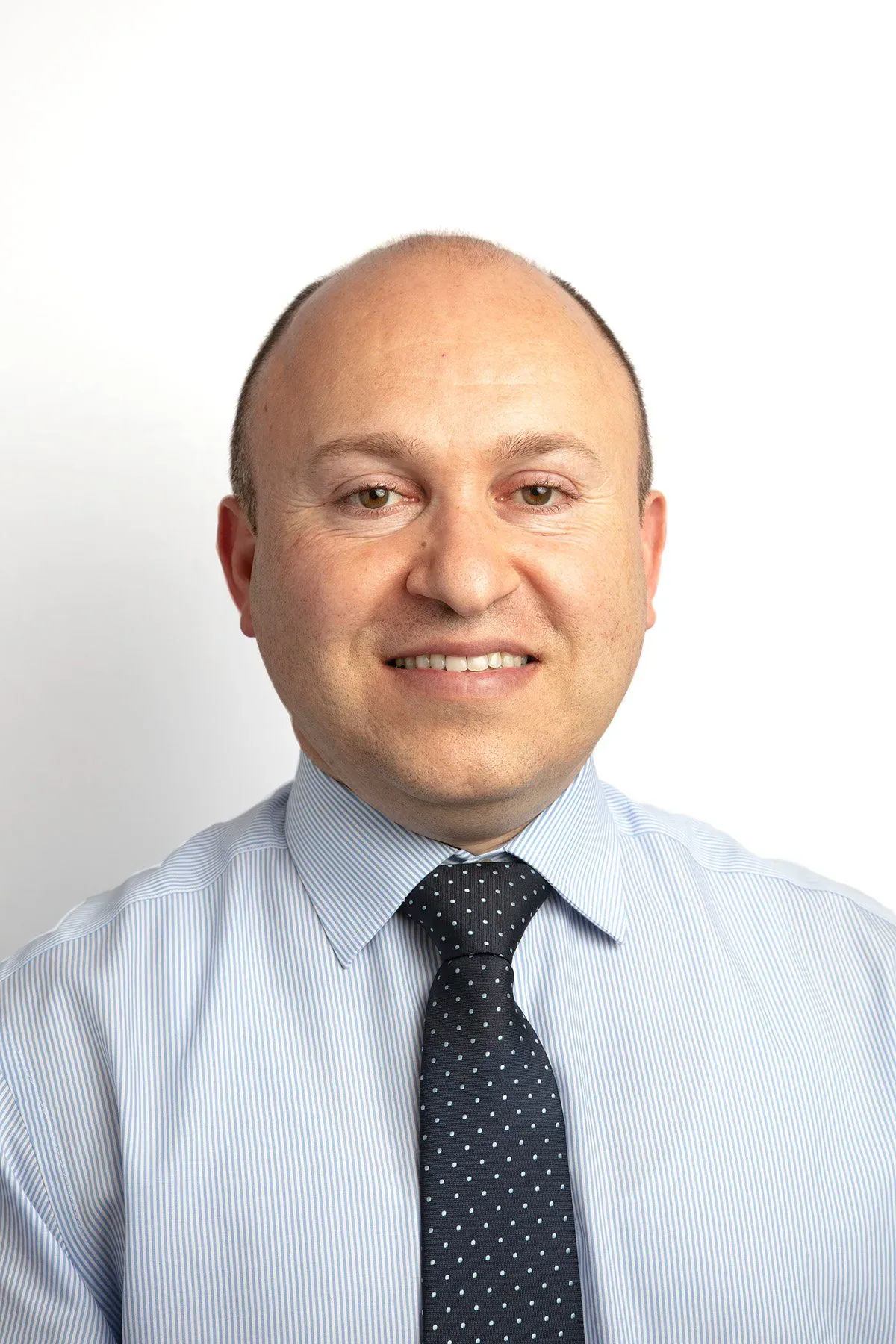
Dr. Boris Pinhasov, DDS, is board-certified by the American Board of Orthodontics. He completed dental training at NYU College of Dentistry and has practiced orthodontics in Queens for 15 years. He treats kids in English, Russian, and Spanish.
A first evaluation with Dr. Pinhasov is complimentary and covers:
- A bite and alignment review of your child's teeth as they're coming in
- A panoramic X-ray if Dr. Pinhasov determines one is needed for the evaluation
- A frank conversation with you about what we see, what's normal at this age, and what (if anything) is worth watching
- If treatment is appropriate now: clear pricing, total case cost, projected timeline, and adjustment cadence
- If treatment is not needed yet: a recommended monitoring schedule (we typically check back every 6 to 12 months at no charge until your child is ready)
- Time to ask every question. Bring yours; bring your child's
Call (718) 290-9444 or book the consultation online.
Why BP Smiles
We will not put your child in braces before they are ready
The most common worry parents bring us is being pushed into treatment, or expense, that a young child does not need yet. That is not how Dr. Pinhasov works. If your child only needs monitoring, we monitor at no charge and tell you exactly when, or whether, to begin. When treatment is genuinely the right call, he explains why in plain terms and the same orthodontist sees your child through to the end.
“Dr Boris P is an amazing orthodontist. He is so professional and knowledgeable. Explains everything thoroughly and love that I am not being rushed. I will be bringing my kids here as well when they are ready for braces.”
Jeany 7
“Dr. Pinhasov and his team are nothing short of amazing. He is thorough, professional, and compassionate. He truly cares about his patients and his work is excellent. My daughter looks forward to her orthodontist visits. Thank you for exceptional service.”
Eliana Ismailov
Board-certified orthodontic care in Queens.
BP Smiles Orthodontics, your orthodontist in Queens, NY.
FAQ
Frequently Asked Questions
The American Association of Orthodontists recommends an initial consultation by age seven. While treatment usually doesn't start that early, age seven is when an orthodontist can get a useful picture of how your child's bite is developing and catch any big issues early.
Most treatments begin around ages 11 to 13, when adult teeth have erupted and we can address alignment, bite, and aesthetics in one comprehensive course of care. Some kids benefit from earlier (phase-1 / interceptive) treatment between ages 7 and 10; Dr. Pinhasov will tell you if that applies to your child.
Early intervention helps the development of permanent teeth and avoids longer treatments later on if needed. When a small step now prevents a bigger problem later, comprehensive treatment in the teen years tends to be shorter and simpler.
No. Most kids who come in for an age-seven evaluation walk out without braces. We monitor at no charge until comprehensive treatment is genuinely needed. Some kids never need braces at all.
Yes. Orthodontists are trained as general dentists before specializing, so we can diagnose cavities and decay during evaluations. If we find anything, we refer you to your child's pediatric or family dentist for treatment.
The first evaluation is complimentary, including an initial X-ray if Dr. Pinhasov decides one is needed. Ongoing monitoring visits are also complimentary until comprehensive treatment becomes appropriate.
Age 7 is exactly when the American Association of Orthodontists recommends a first evaluation, but it is rarely when treatment starts. By 7 there are enough adult teeth to see how the bite is developing. Most kids just get monitored, at no charge, until around ages 11 to 13. The early visit is about catching anything that matters early, not starting braces.
Because most young patients leave without treatment recommended, and we monitor them for free until the timing is right. Dr. Pinhasov will tell you honestly if your child should wait. You get a clear explanation of what he sees and why, so you can decide at your own pace.
Disclaimer: This information is provided for educational purposes and is not a substitute for professional dental or medical advice. Please schedule a consultation with our team to discuss your individual needs.