Orthodontic Services
Brava by BRIUS Hidden Braces in Queens, NY
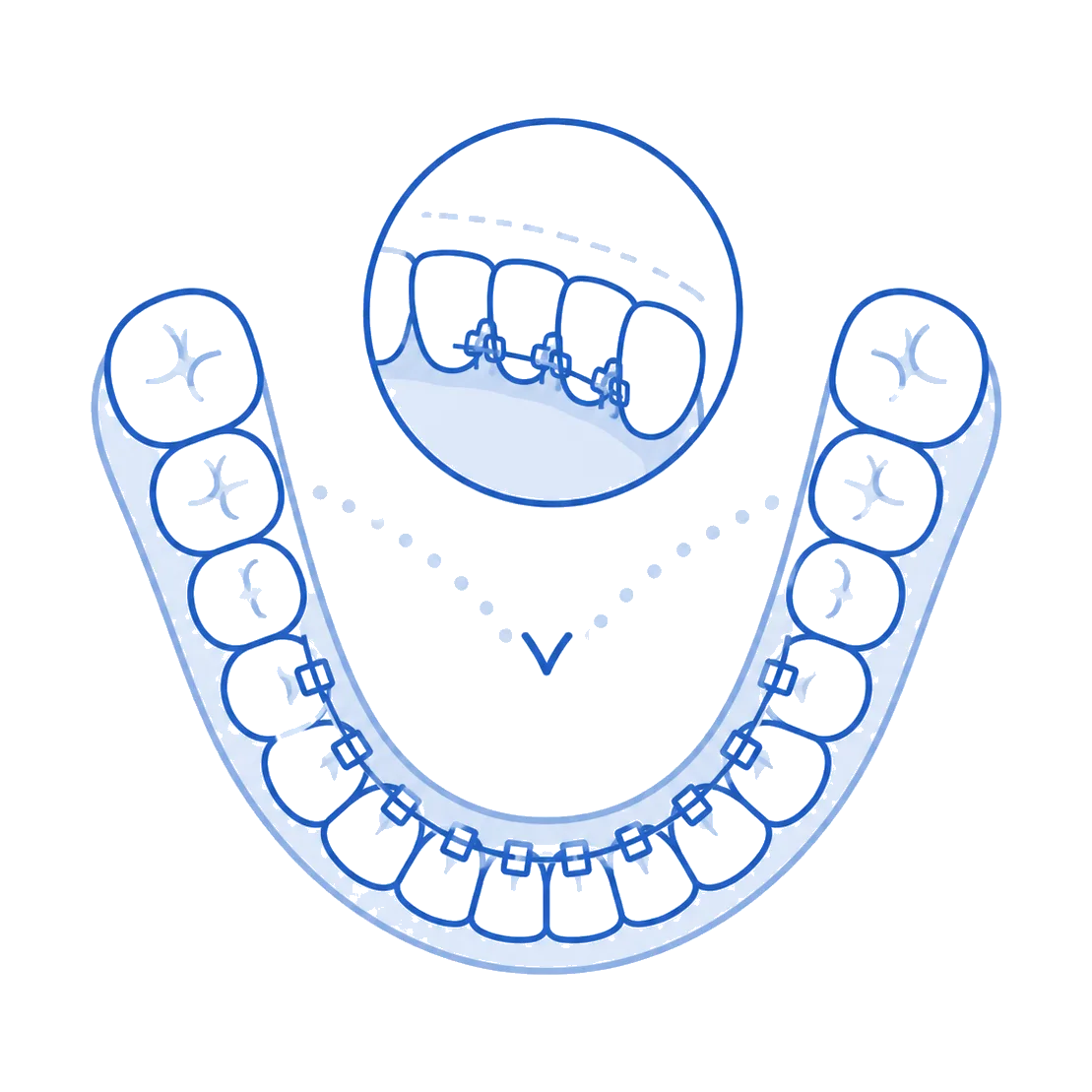
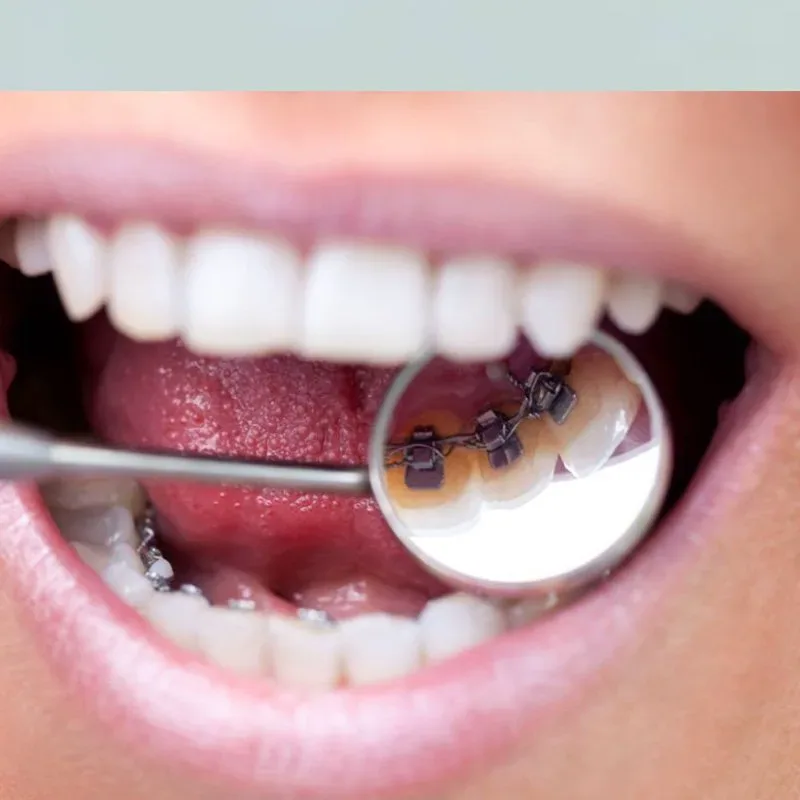
Brava by BRIUS is a lingual braces system that sits behind your teeth. From the outside, no one can tell you are in treatment. The brackets are custom-made for each tooth and bonded to the tongue side, and the system works around the clock without anything to remove or remember. Dr. Boris Pinhasov offers Brava at BP Smiles Orthodontics on Union Turnpike for patients across Queens.


“Dr. Boris is patient and knowledgeable. He and the staff offers great bedside manner. He explained the whole process with great detail from metal expanders to braces. My child’s teeth has made a vast improvement over the course of 10 months.”
Common questions
Brava braces in Queens: visits, timing and cost

Concern Match
Are Brava Hidden Braces Right for You?
Match your situation to the right next step.

Would ceramic braces be hidden enough for me?
Ceramic braces blend with the teeth but are still visible at close range. Brava sits behind the teeth, so it stays hidden in conversation, in photos and on camera.
I keep forgetting to wear my aligners. Is a fixed option better for me?
Brava is fixed. It works all day without being taken out, put back, cleaned or tracked, which suits patients who travel, work long shifts or forget trays.

I heard lingual braces are bulky and slow. Is Brava different?
Older lingual systems used generic brackets and a continuous wire. Brava brackets are made for each tooth from your scan and move teeth independently, which is designed to shorten treatment and reduce bulk. The first one to two weeks of tongue adjustment are still part of it, and Dr. Pinhasov explains that honestly.
My case is simple. Would clear aligners do the job?
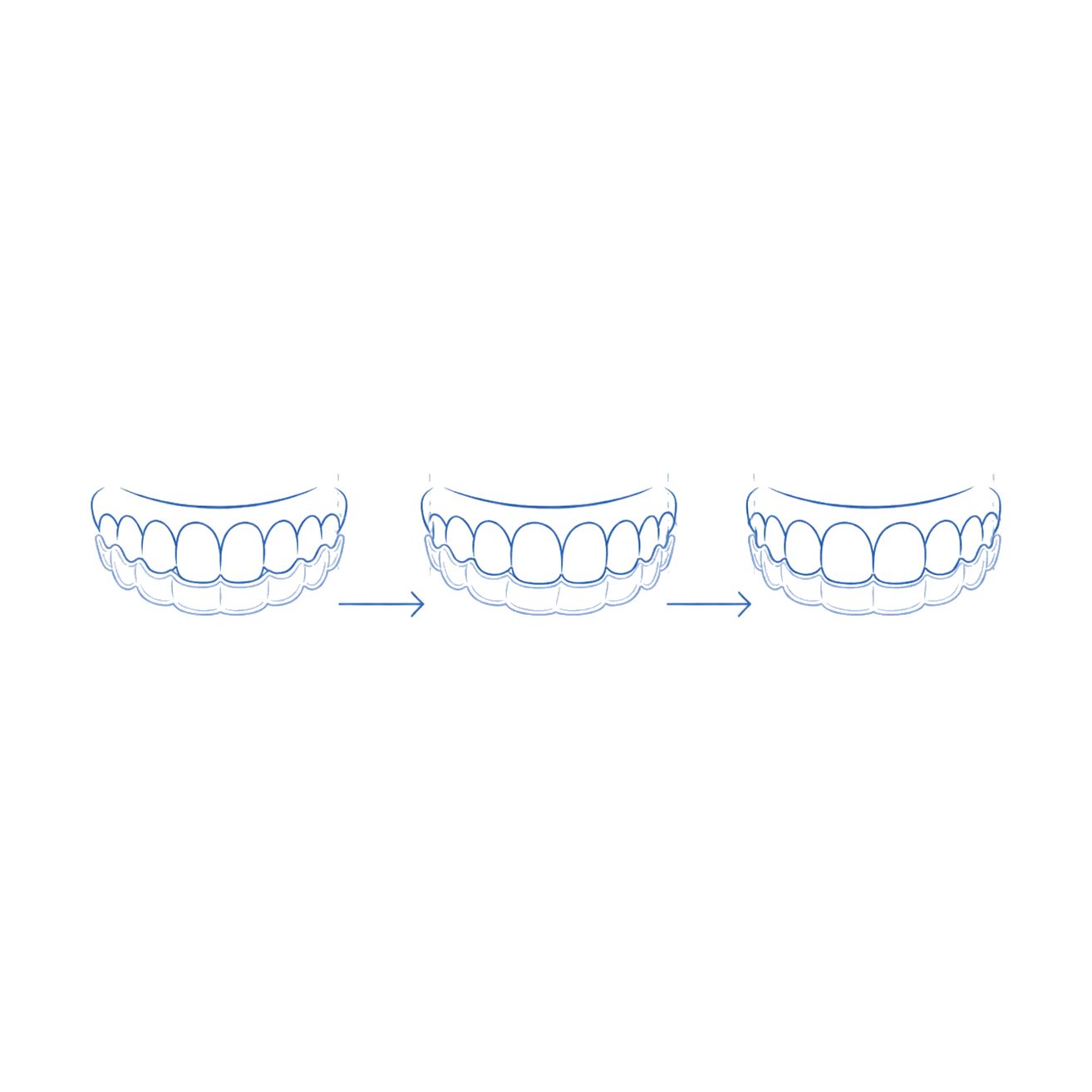
For patients who prefer something removable and have a simpler case, Invisalign may be the better fit. Dr. Pinhasov offers both and recommends based on your bite and your habits.
Years of Practice
Languages Spoken
Star Rating
Google Reviews
YOUR INVISALIGN ORTHODONTIST IN QUEENS,NY
Brava braces placed by Dr. Pinhasov in Queens
Lingual braces demand a higher level of orthodontic skill than standard braces. The brackets are placed on the inside surfaces of the teeth, where anatomy varies significantly from tooth to tooth and access is limited. Precise placement is critical to how the system works and how comfortable it feels.
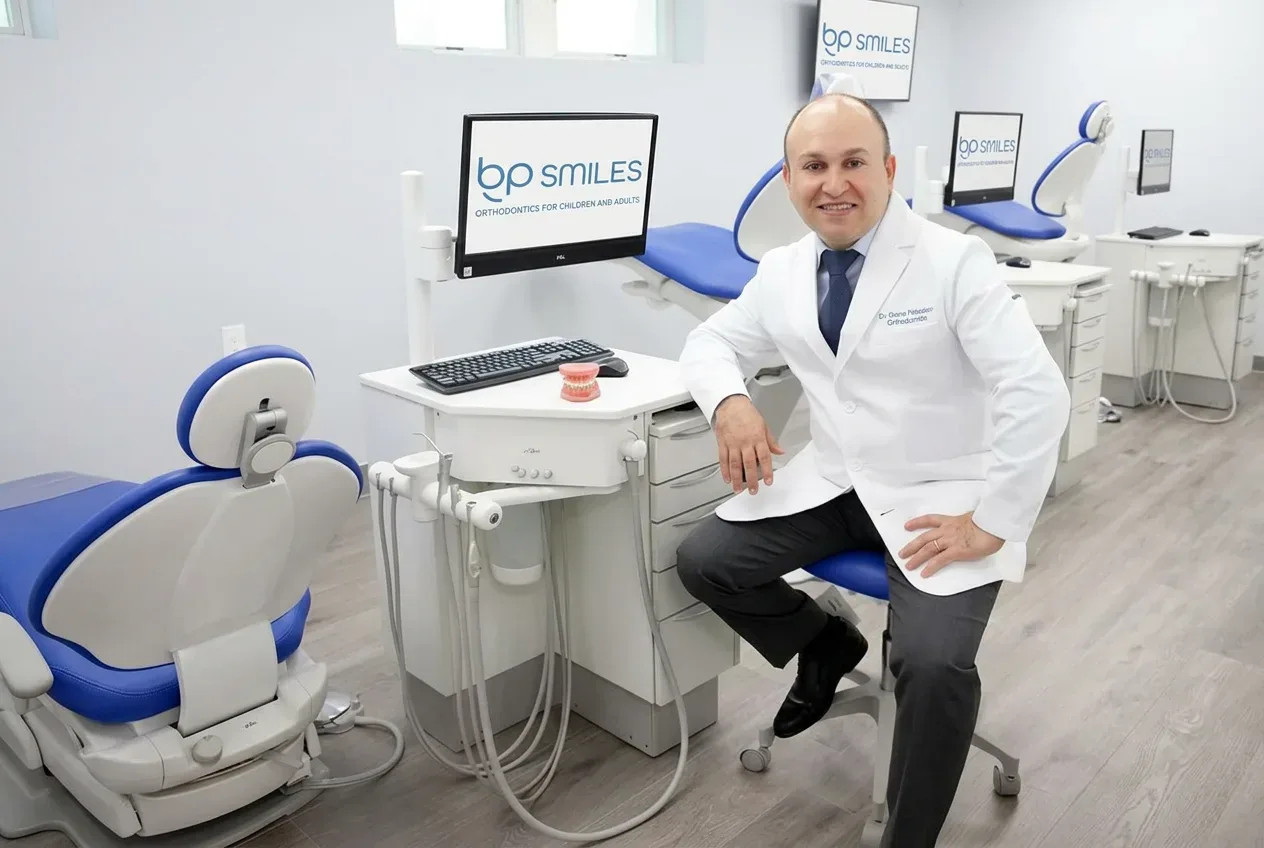
Dr. Pinhasov's credentials match the complexity of this treatment. He is a board-certified ABO Diplomate with 15 years of clinical experience. His NYU DDS with honors, FAGD and ICOI Fellowship reflect training that goes deep into the mechanics of tooth movement and bite correction. Consultations are available in English, Russian and Spanish.
What Is Brava by BRIUS?
Brava is a custom lingual orthodontic system. Each bracket is individually designed and fabricated for each tooth using digital planning software. The brackets are bonded to the back (lingual) surfaces of your teeth and connected by a precision wire system.

Brava vs Invisalign: hidden fixed braces or removable aligners
Both are marketed as discreet, but they work in fundamentally different ways. Invisalign uses removable clear plastic trays that you wear about 22 hours a day and change on a schedule. Brava uses custom brackets fixed to the back of your teeth. Brava stays hidden behind the teeth, nothing has to come out to eat, and it works around the clock without relying on you to wear it consistently.
For patients who travel frequently, have inconsistent schedules, or simply do not want to think about removing and reinserting aligners throughout the day, Brava's fixed design is a significant advantage. For patients who prefer something removable and have a simpler case, Invisalign may be the better fit. Dr. Pinhasov offers both and recommends based on your bite and your habits.
Brava vs traditional lingual braces: what is different?
Conventional lingual braces use standard brackets and a continuous archwire bent to run behind the teeth. They hide well but can feel bulky, and the single wire moves all teeth together, which can make complex movements slow. Brava replaces the continuous wire with a bracket that moves each tooth on its own, pre-programmed from the digital plan, so several teeth can move in different directions at once. That is the reason for the fewer visits and, in many cases, the shorter treatment time. The trade-off is the same for any lingual system: a short adjustment period for the tongue and a little extra attention when cleaning.
How Brava treatment works, from scan to retainer
- 1Consultation. Dr. Pinhasov examines your teeth, takes digital scans, X-rays and photographs. He determines whether your case is suitable for Brava and explains the expected treatment plan.
- 2Digital design. Your scans are used to design each bracket individually. The treatment is planned digitally from start to finish, mapping exactly how each tooth will move and in what sequence.
- 3Bonding appointment. The custom brackets are bonded to the lingual surfaces of your teeth using a precise placement guide. This appointment is longer than a standard braces placement, typically 60 to 90 minutes.
- 4Progress visits. You return every 6 to 10 weeks for monitoring and adjustments. Appointments are generally shorter than traditional braces visits because much of the treatment mechanics are built into the initial setup.
- 5Completion and retention. Once treatment is finished, the brackets are removed and retainers are provided to maintain your results.
What the first weeks with Brava braces feel like
The first one to two weeks with Brava involve an adjustment period. Because the brackets are on the tongue side, your tongue needs time to adapt. Some patients notice a temporary lisp and mild tongue irritation during this period. Both resolve as the tongue adjusts to the presence of the brackets.
Eating is unrestricted compared to traditional braces, though very hard or sticky foods should still be avoided to protect the brackets. Oral hygiene requires attention to the lingual surfaces, and Dr. Pinhasov's team will show you how to clean effectively around the brackets.
How much does Brava cost in Queens?
Brava typically costs more than traditional metal braces because each bracket is custom-designed and the technology involved in planning and fabrication is more advanced. The difference varies by case: how complex the bite is, how long treatment runs, and whether both arches are treated all move the price. BP Smiles offers payment plans, accepts most major insurance plans, and your dental insurance orthodontic benefit applies to Brava as it would to any other braces system. You receive the price for your case at the free consultation, before anything starts.

Why BP Smiles
Getting Brava braces at BP Smiles in Queens
A board-certified orthodontist places every Brava bracket
Dr. Pinhasov plans the case digitally, places the brackets and checks the progress at every visit.
Brava, Invisalign and ceramic braces in one Queens office
All three discreet options are offered here, so the recommendation follows your bite and your habits. Prices, insurance and payment plans are explained at the free consultation.
Hidden braces planned by a board-certified orthodontist in Queens.
BP Smiles Orthodontics, your orthodontist in Queens, NY.
FAQ
Brava by BRIUS Hidden Braces in Queens: common questions
No. Invisalign uses removable clear plastic trays. Brava uses custom brackets fixed to the back of your teeth, so it stays hidden, nothing comes out to eat, and it works around the clock without relying on you to wear it consistently.
No. Brava brackets are bonded to the lingual (tongue-side) surfaces of your teeth. When you smile, talk or open your mouth in conversation, the brackets are not visible. This is what makes Brava distinct from ceramic braces and clear aligners, which are still detectable at close range.
Treatment duration depends on the complexity of your case. Many Brava cases are completed in 12 to 18 months. Some simpler cases finish sooner. Dr. Pinhasov provides an estimated timeline during your consultation based on your specific diagnosis and treatment goals.
Usually, yes. Brava typically costs more than traditional metal braces because each bracket is custom-designed and the planning and fabrication technology is more advanced. The difference varies by case. BP Smiles offers payment plans, and your dental insurance orthodontic benefit applies to Brava just as it would to any other braces system.
Brava works for a wide range of orthodontic cases in teens and adults. It suits patients who want completely invisible treatment, do not want the responsibility of wearing and tracking removable aligners, and prefer a fixed system that works without daily compliance. Dr. Pinhasov evaluates each case individually to confirm Brava can achieve the desired result.
Some patients notice a temporary lisp in the first one to two weeks while the tongue adapts to the brackets. It resolves as the tongue adjusts.
Yes. Brava is used for teens and adults. Dr. Pinhasov confirms suitability at the consultation after the scan and X-rays.
Disclaimer: This information is provided for educational purposes and is not a substitute for professional dental or medical advice. Please schedule a consultation with our team to discuss your individual needs.