
Orthodontic Blog
Is the Black Mold on My Invisalign Case Dangerous, and How Do I Get Rid of It?
Black spots in your Invisalign case are mold. Here is whether it is dangerous, how to remove it safely, and how to stop it coming back, from a Queens orthodontist.
- Dr. Boris Pinhasov, DDS
- November 1, 2024
- 6:02 pm
Medically reviewed by Dr. Boris Pinhasov, DDS, American Board of Orthodontics Diplomate | Last Updated: September 2026
Those black spots in your Invisalign case are mold and bacterial biofilm growing in trapped moisture. For most healthy people the spots themselves are not an emergency, but you should stop using that case today. Storing aligners against mold presses fungus and bacteria back onto your teeth for 20 or more hours a day. Replace a case with established mold, and air dry the new one open.
What the Black Spots in Your Invisalign Case Actually Are
The black, brown, or pink specks that show up in the corners and hinges of an aligner case are biofilm. Biofilm is a living layer of bacteria and, in a damp case, fungal (mold) growth. It forms when you close wet aligners into a closed case and the moisture never dries out. Warm, dark, and sealed is the exact environment mold and bacteria need to colonize.
This is different from a coffee or wine stain, which sits on the surface and wipes away. Mold has roots that work into the plastic and the seams, which is why a quick wipe never fully clears it.
Is Black Mold in an Invisalign Case Dangerous? What the Risk Really Depends On
For a healthy adult or teen, the mold in a case is usually a hygiene warning rather than a serious health threat. According to the Cleveland Clinic, “black mold” is not automatically more toxic than other household molds, and the most common reactions to any mold are allergy and irritation: sneezing, a runny nose, red eyes, or a skin reaction.
The real risk with an aligner case is repeated exposure. You put those trays back in your mouth many times a day. Re-seating a mold and bacteria layer against your teeth and gums raises your chance of gum inflammation, decay, bad breath, and oral thrush (a yeast overgrowth), especially if your brushing slips during treatment.
Invisalign is generally safe, but maintaining good oral hygiene during treatment is crucial. Poor oral hygiene with either braces or Invisalign can lead to periodontal issues, which might result in gum recession.
— Dr. Boris Pinhasov, DDS
So the case mold is rarely dangerous on its own. What it signals, a wet closed case feeding bacteria straight into your mouth, is worth fixing right away.
Who Should Treat Invisalign Case Mold as Urgent
Some people should not take any chances with mold exposure. The CDC notes that people with weakened immune systems and those with chronic lung conditions or mold allergies are more vulnerable to fungal problems. If any of the following describe you, replace the case immediately and clean your aligners thoroughly before wearing them again:
- You are undergoing chemotherapy or take immune-suppressing medication.
- You have had an organ or stem-cell transplant.
- You have poorly controlled diabetes, asthma, or a known mold allergy.
- You have a wound, ulcer, or recent surgery inside your mouth.
If you notice mouth sores, white patches, persistent gum swelling, or a reaction you cannot explain, call our office and your physician.
How to Get Rid of Mold in Your Invisalign Case in 5 Steps
For a case with early mold (one small spot or a light film), you can clean it. For anything more established, skip to the next section and replace it. To clean early mold:
- 1Soak the case in one part white vinegar to three parts warm water for 30 minutes.
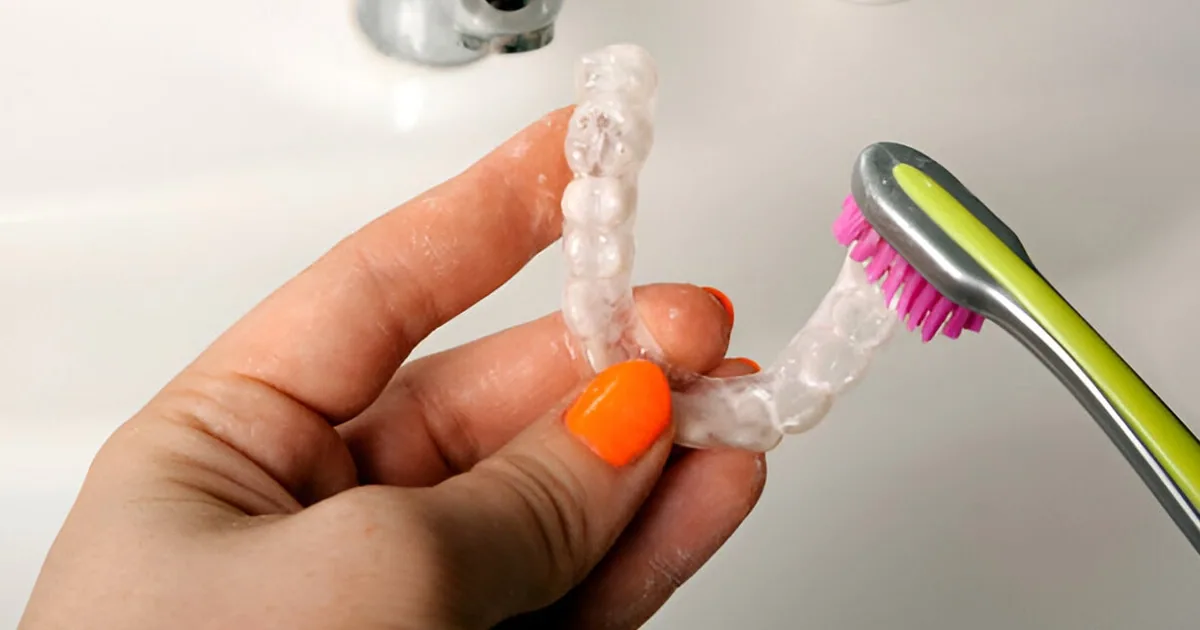
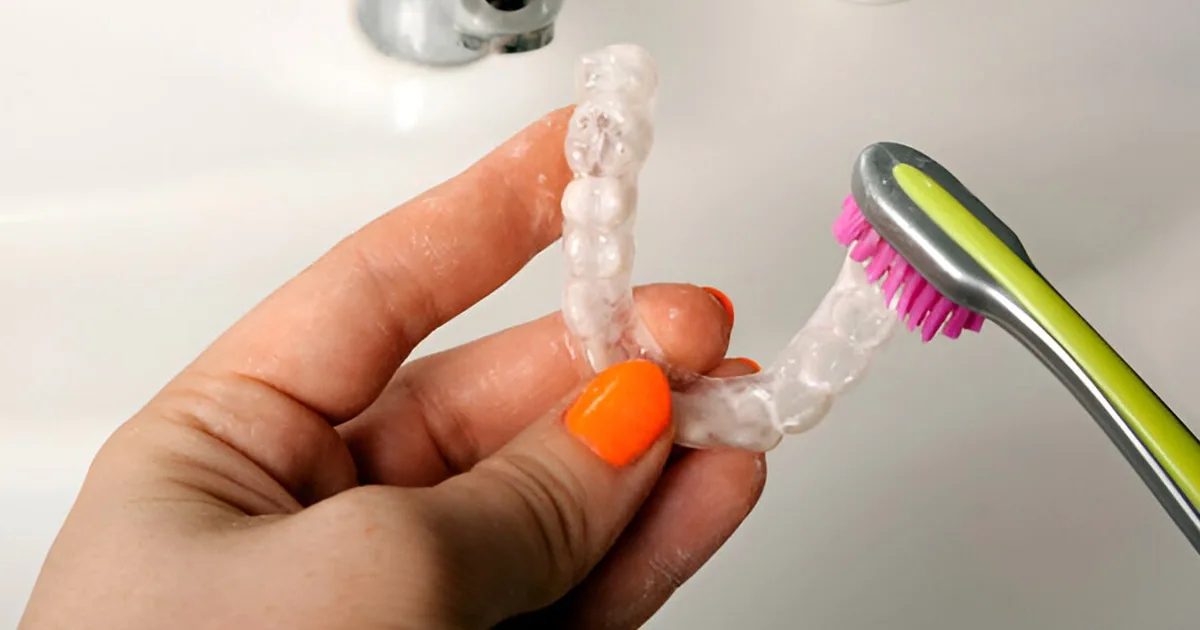
- 2Scrub every interior surface, corner, and hinge with a soft toothbrush kept only for the case, never the brush you use on your teeth.
- 3Rinse under running warm water for at least two minutes so no vinegar or residue is left.
- 4Air dry the case open and upside down for at least six hours, ideally overnight.
- 5Inspect under a bright light. If any discoloration or smell remains, replace the case.
Clean your aligners separately before you wear them again: rinse them, then brush gently with a soft brush and clear antibacterial soap, and rinse once more.
When to Throw the Case Out Instead of Cleaning It
A moldy case is inexpensive to replace and not worth risking. Replace it, do not try to salvage it, when:
- Mold has spread past a single spot or keeps coming back after cleaning.
- The plastic is cracked, cloudy, or stained in a way that will not rinse clear.
- The case holds a smell after a full clean and dry.
- The hinges no longer close, so aligners are exposed.
Ask for a fresh case at your next check-in at our Queens office. Keep a clean spare so you are never forced to store aligners in a compromised case.
How to Stop Mold From Coming Back in Your Aligner Case
Mold needs trapped moisture. Take that away and it cannot grow. Three habits prevent almost every case of aligner-case mold:
- Air dry the case open after every wash, and never snap wet aligners into a closed case.
- Wash the case daily with warm water and mild antibacterial soap, and deep clean weekly.
- Replace the case every two to three months, sooner if it cracks or stains.
The cleaning itself is simple, in Dr. Pinhasov's words below. The step people miss is the drying. A brushed case that goes back into a pocket or bag still damp is where mold restarts.
The case can be cleaned using a toothbrush and a bit of toothpaste. Simply brush and rinse the case, and it will be clean.
— Dr. Boris Pinhasov, DDS
How to Clean Your Invisalign Case Day to Day
A clean case protects trays that sit against your teeth most of the day. Clear aligners already shift the mouth's bacterial balance because they cover the teeth and slow saliva's natural rinsing, which is why the American Dental Association stresses consistent brushing during treatment. Keep to this schedule:
- Quick rinse and dry, every time you remove your aligners: warm water, then air dry the case open.
- Wash with antibacterial soap, daily each morning: mild soap and a soft toothbrush, rinse, then air dry open.
- Deep clean, weekly: a warm soapy soak for 5 minutes, scrub, rinse, then air dry 30 minutes or longer.
- Replace the case, every 2 to 3 months or sooner if cracked or stained: request a new case from your orthodontist.
Avoid hot water above 120F (it warps the plastic), bleach, alcohol-based mouthwash, and abrasive scrub pads. These damage the case or leave residue you do not want near your aligners.
Get Expert Invisalign Care in Queens, NY
If mold keeps returning, your case smells, or you want a fresh case and a hygiene check on your aligners, we can help. Dr. Boris Pinhasov, Board-Certified Orthodontist and ABO Diplomate, treats Invisalign patients at our Queens, NY office at 208-09 Union Turnpike. Call 718-290-9444 or schedule your Queens Invisalign consult for aligner care guidance and a replacement case.
Disclaimer: This information is provided for educational purposes and is not a substitute for professional medical advice, diagnosis, or treatment. Please schedule a consultation with our team to discuss your individual needs.
Sources
- Cleveland Clinic, Black Mold Exposure: Symptoms, Risks and Treatment.
- CDC, About Mold.
- American Dental Association, MouthHealthy, Brushing Your Teeth.
- American Dental Association News, How clear aligners shape the mouth's bacterial ecosystem (ADA Forsyth).
- Cleaning and Disinfection Protocols for Clear Orthodontic Aligners: A Systematic Review (NIH/PMC).
Ready to Start Your Smile Journey?
Schedule a free consultation with Dr. Boris Pinhasov in Queens.
FAQ
Frequently Asked Questions
For most healthy people the mold spots are a hygiene warning rather than a serious health threat, and black mold is not automatically more toxic than other molds. The concern is repeated exposure from re-seating a moldy case against your teeth, which can raise the risk of gum inflammation, decay, and oral thrush. People with weakened immune systems, mold allergies, or lung conditions should replace the case right away.
For a single early spot, soak the case in one part white vinegar to three parts warm water for 30 minutes, scrub with a dedicated soft toothbrush, rinse for two minutes, and air dry it open overnight. If mold has spread, keeps returning, or the case smells after cleaning, throw it out and use a fresh case.
Not until the aligners are cleaned. Brush them gently with a soft brush and clear antibacterial soap, rinse well, then store them in a clean, dry case. If the aligners themselves show discoloration or a film that will not clear, ask your orthodontist before wearing them.
Almost always because aligners go in wet and the case is closed before it dries. Trapped moisture feeds mold and bacteria. Air dry the case open after every wash, wash it daily, and replace it every two to three months.
It can raise the risk, especially with poor brushing or a weakened immune system, because you are reintroducing bacteria and fungus to the mouth many times a day. Healthy people who catch it early and switch cases usually have no lasting problem. Watch for mouth sores, white patches, or persistent gum swelling and get those checked.