
Orthodontic Blog
Why Does My Invisalign Smell? Causes and Cleaning Solutions
Invisalign odor is biofilm and bacteria, not a defect. The right twice-daily routine eliminates the smell within 48 hours. Queens orthodontist guide to fresh aligners.
- Dr. Boris Pinhasov, DDS
- May 4, 2026
- 11:00 am
Medically reviewed by Dr. Boris Pinhasov, DDS, Board-Certified Orthodontist (ABO Diplomate) | 15 Years of Experience | Last Updated: June 2026
Quick Answer
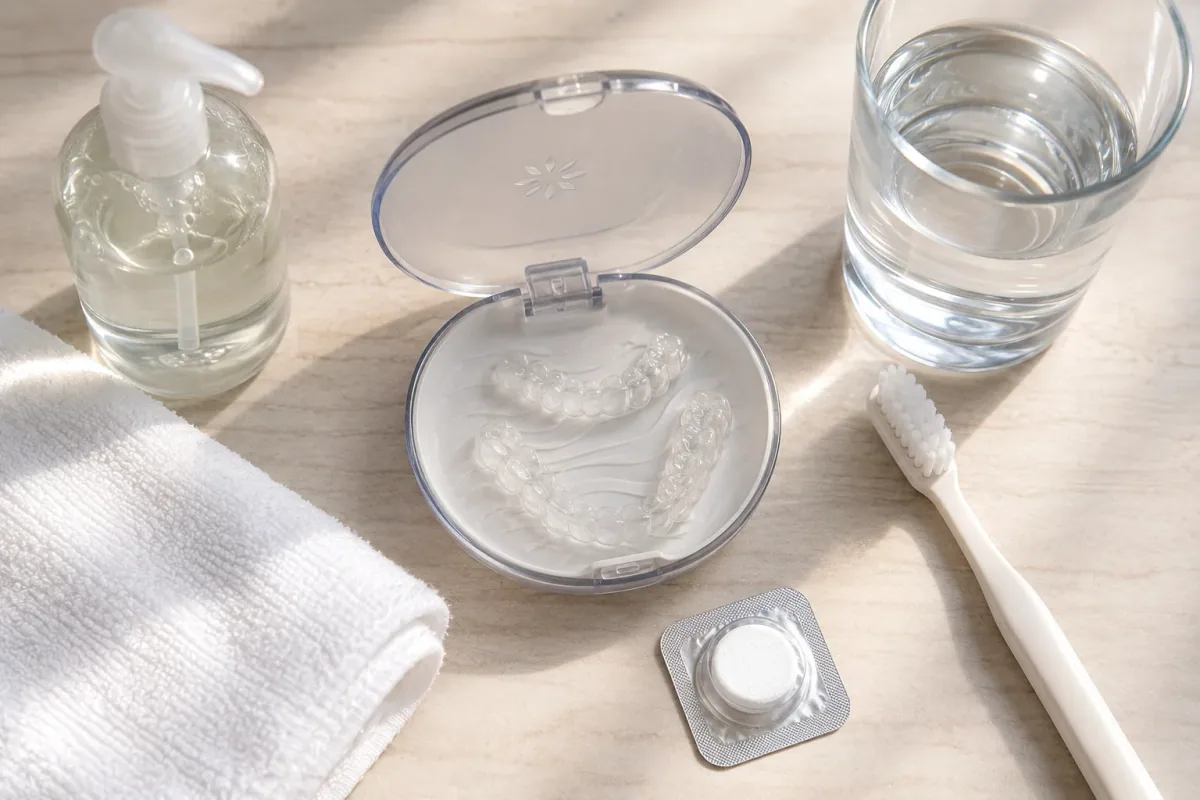
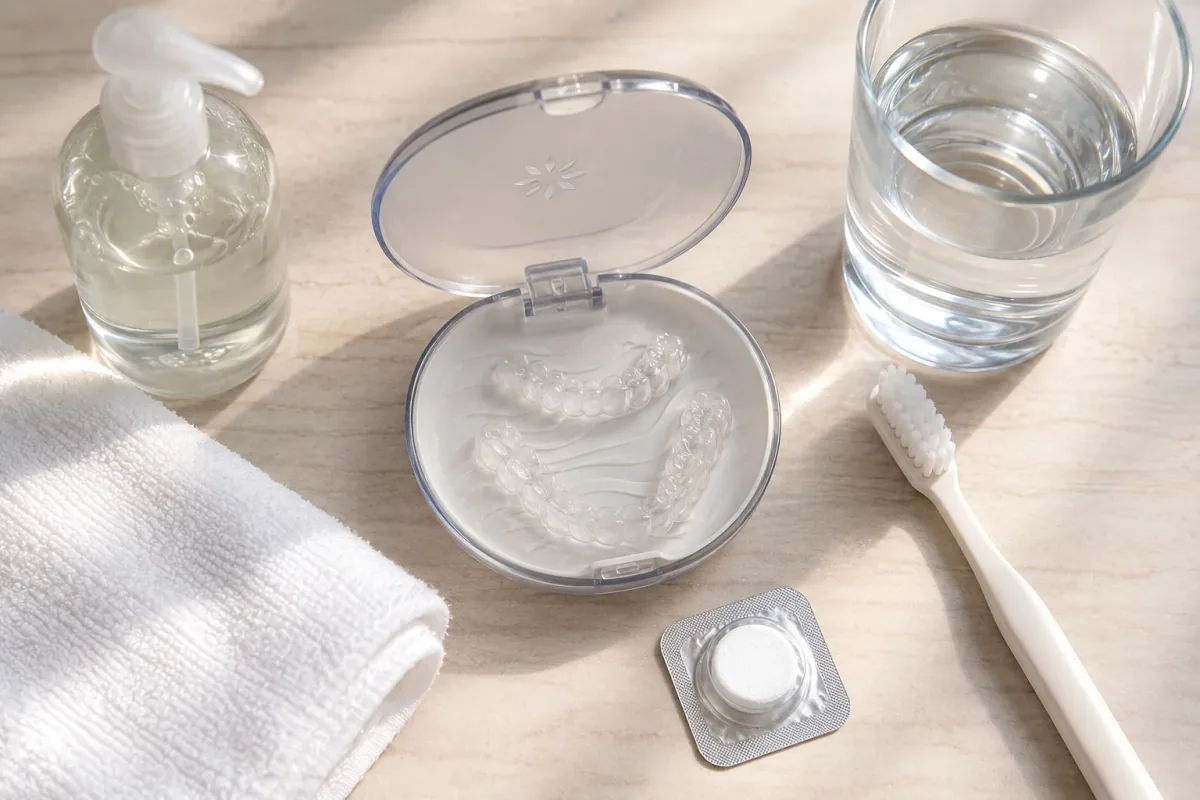
Invisalign trays smell when bacteria, food particles, and saliva build into a biofilm on the plastic. The fix is a twice-daily cleaning routine: rinse the trays in cool water, brush gently with clear liquid soap (not toothpaste), soak weekly in a denture or aligner cleaning tablet, and brush your own teeth before reinserting. Persistent odor after a deep clean usually means scratched plastic that needs to be replaced, or active gum disease that needs to be evaluated.
If your Invisalign trays smell after a few days of wear, the cause is almost always biological: warm, moist plastic spends 22 hours a day in your mouth, which is the perfect environment for bacteria to grow. The smell is the by-product of that bacterial activity, not a defect in the trays themselves. The good news is that almost every case of Invisalign odor resolves within 24 to 48 hours of a proper cleaning routine.
This guide explains exactly why the smell happens, the step-by-step routine that eliminates it, and the few situations where odor signals something that needs your orthodontist’s or general dentist’s attention.
The Three Sources of Invisalign Odor
Almost all aligner odor traces back to one of three causes:
1. Biofilm on the trays. Saliva, food particles, and the bacteria that already live in your mouth combine to form a thin sticky film on the plastic. Within hours, that film becomes a microscopic ecosystem of bacteria producing volatile sulfur compounds, the same compounds responsible for general bad breath. The longer between cleanings, the stronger the smell.
2. Plaque sealed against your teeth. When you put trays in over teeth that have not been brushed, you are sealing fresh plaque and food residue against the tooth surface for hours. Bacteria multiply rapidly in that closed environment and produce odor that you smell every time the trays come out.
3. The case itself. Wet, used trays stored in a closed case grow bacteria fast. The case becomes a reservoir that re-contaminates clean trays every time you store them. Per Dr. Pinhasov, “the case can be cleaned using a toothbrush and a bit of toothpaste. Simply brush and rinse the case, and it will be clean.” A weekly case cleaning is essential.
Less common causes include scratched plastic that traps bacteria in surface damage (irreversible, requires tray replacement) and underlying oral health issues like gum disease or untreated tooth decay (requires evaluation by your general dentist).
The Daily Routine That Stops the Smell
Most patients eliminate Invisalign odor within 48 hours by following a consistent twice-daily cleaning routine:
- 1Remove and rinse immediately. Take the trays out and rinse them in cool or lukewarm water, never hot. Heat warps the plastic and changes the fit.
- 2Brush the trays gently. Use a soft-bristle toothbrush dedicated to your aligners (not the same brush you use on your teeth) and clear, fragrance-free liquid soap. Brush both the inside and outside surfaces for 30 seconds each. Skip toothpaste, which contains abrasives that scratch the plastic and create more places for bacteria to hide.
- 3Rinse the trays again. Make sure no soap residue remains.
- 4Brush and floss your own teeth. Removing plaque from your teeth before reinserting the trays is what stops the second source of odor at its source.
- 5Reinsert the trays. Clean trays over clean teeth. That is the entire framework.
Twice a day is the right cadence: morning and evening. Some patients add a midday rinse and brush after lunch, especially if they had coffee or strong-flavored food. Skipping a single cleaning will not cause noticeable odor; skipping for two or three days almost always will.
The Weekly Deep Clean
Daily cleaning handles surface biofilm. A weekly deep clean handles the residue that accumulates between cleanings:
- Use a dedicated aligner cleaning product. Invisalign Cleaning Crystals, Retainer Brite, or any major aligner-specific cleaning tablet works. Dissolve one tablet in lukewarm water and submerge the trays for 15 to 20 minutes. Follow the package instructions for your specific brand.
- Brush after the soak. The soak loosens biofilm; the brush physically removes it. Both steps are needed.
- Clean the case at the same time. Toothbrush and toothpaste, brush both halves inside and out, rinse thoroughly, dry with a clean towel before storing.
- Air dry everything before storing. Bacteria grow fastest in warm, wet, sealed environments. A dry case and dry trays slow that down dramatically.
This deep clean takes about 25 minutes once a week. Patients who run the deep clean every Sunday almost never report Invisalign odor.
What to Avoid
Several common cleaning approaches create more problems than they solve:
- Whitening or charcoal toothpastes. The micro-abrasive particles polish enamel and scratch SmartTrack plastic. Scratched trays trap bacteria in surface damage that no amount of cleaning can fully remove. Once the plastic is scratched, the smell often becomes permanent for the life of that tray.
- Hot water or boiling. Heat warps Invisalign plastic. Even one accidental hot rinse can change the fit and force you to order a replacement.
- Bleach, hydrogen peroxide, or harsh chemical cleaners. These can degrade the plastic and leave residue that irritates oral tissues. Stick to products designed specifically for aligners or retainers.
- Sealing wet trays in a closed case for hours. The bacteria you just cleaned off start growing again immediately in a sealed wet environment. Air-dry before storing.
Habits That Prevent the Smell from Coming Back
Beyond the daily and weekly cleaning, three habits keep aligners fresh:
- 1Trays out for everything except plain water. Coffee, tea, juice, soda, milk, alcohol, even flavored sparkling water: all of it deposits residue and pigment. Trays out, drink, then rinse and reinsert.
- 2Rinse your mouth before reinserting. A 5-second water swish washes away the food and beverage residue still on your teeth. This is the single habit that prevents most cases of recurring odor.
- 3Use the case every time. A tray sitting on a napkin while you eat lunch picks up bacteria from the napkin, the table, and the air. The case is the safer storage even for short periods.
“Invisalign is generally safe, but maintaining good oral hygiene during treatment is crucial. Poor oral hygiene with either braces or Invisalign can lead to periodontal issues, which might result in gum recession.”
Dr. Boris Pinhasov, DDS, Board-Certified Orthodontist, BP Smiles Orthodontics
When Odor Means Something More
If you have followed the cleaning routine consistently for a week and the smell persists, consider these possibilities:
- Scratched or warped plastic. Examine the trays in good light. Visible scratches, cloudiness that does not clear after a deep clean, or warping from past hot-water exposure all create permanent bacterial reservoirs. Replacement is the only fix.
- Aligners worn well past their two-week mark. Old plastic loses elasticity, and the surface accumulates damage that cleaning cannot fully reverse. If you have stretched a single tray for three or more weeks, the smell may be telling you the tray is past its useful life.
- Active gum disease or tooth decay. Bad breath that is also present without the trays is usually a general oral health issue, not an Invisalign problem. A general dental exam can identify infections, decay, or periodontal disease that need treatment.
- Dry mouth or medication side effects. Reduced saliva flow lets bacteria multiply more quickly. Hydration, sugar-free gum (when trays are out), or speaking with your prescribing physician about a medication change may help.
If the odor persists after a thorough deep clean and a tray inspection, contact our office. We can examine the trays, check for fit issues, and refer you for a general dental evaluation if anything outside the orthodontic scope needs attention.
BP Smiles Orthodontics in Queens, NY
BP Smiles Orthodontics is located at 208-09 Union Turnpike, Queens NY 11364. Dr. Boris Pinhasov is a Board-Certified Orthodontist (ABO Diplomate), with more than 15 years of experience treating Invisalign patients across all stages of treatment. Our patients come from Kew Gardens, Oakland Gardens, Bayside Hills, Flushing, Queens Village, and surrounding neighborhoods along Union Turnpike. We offer free consultations including iTero scans, interest-free in-house financing, and ongoing hygiene coaching for every Invisalign patient. Our team speaks English, Russian, and Spanish.
If your trays smell and the home routine is not solving it, or if you would like Dr. Pinhasov to inspect the trays for damage, schedule a free consultation. We will diagnose the cause and get you back to clean, fresh aligners.
Or call 718-290-9444
Why do my Invisalign trays smell only a few hours after I clean them?
If the smell returns within hours, the most likely cause is plaque on your teeth being sealed against the trays at reinsertion. Brushing and flossing your teeth before putting the trays back in stops most of this. Rinsing your mouth with plain water before reinsertion (especially after meals) addresses the rest.
Can mouthwash get rid of Invisalign smell?
Mouthwash addresses the smell on your breath, not on the trays. For the trays themselves, use clear liquid soap with a soft brush (daily) and an aligner cleaning tablet (weekly). Avoid soaking trays in mouthwash, which often contains dyes that stain the plastic and alcohol that can dry it out.
Is it safe to use Invisalign that smells?
Wearing trays with a noticeable bacterial smell for a short time is not dangerous, but it is a sign that bacterial load is high. Sustained exposure increases the risk of gum inflammation, cavities, and bad breath that lingers even when the trays are out. Address the cleaning routine within a day or two, not weeks.
Can the smell come from my retainer instead of the trays?
Yes. Retainers worn after Invisalign treatment have the same biofilm buildup pattern. The same cleaning routine applies: daily brushing with clear liquid soap, weekly soaking in a cleaning tablet, and brushing your teeth before reinsertion.
Does mouth dryness make Invisalign smell worse?
Yes. Saliva is your body’s natural antibacterial wash. When saliva flow is reduced (dehydration, mouth breathing, certain medications), bacteria grow more freely. Hydration, breathing through your nose when possible, and discussing dry-mouth medications with your prescribing physician all help.
Should I throw away smelly trays and switch to the next set early?
Not without checking with your orthodontist. Switching trays early can disrupt the planned tooth movement and slow the overall treatment. Try a thorough deep clean first. If the smell persists after one or two careful cleanings and the plastic looks scratched or cloudy, call our office to discuss whether a replacement tray is the right next step.
This information is provided for educational purposes and is not a substitute for professional medical advice, diagnosis, or treatment. Please schedule a consultation with our team to discuss your individual needs.
Ready to Start Your Smile Journey?
Schedule a free consultation with Dr. Boris Pinhasov in Queens.
FAQ
Frequently Asked Questions
If the smell returns within hours, the most likely cause is plaque on your teeth being sealed against the trays at reinsertion. Brushing and flossing your teeth before putting the trays back in stops most of this. Rinsing your mouth with plain water before reinsertion (especially after meals) addresses the rest.
Mouthwash addresses the smell on your breath, not on the trays. For the trays themselves, use clear liquid soap with a soft brush (daily) and an aligner cleaning tablet (weekly). Avoid soaking trays in mouthwash, which often contains dyes that stain the plastic and alcohol that can dry it out.
Wearing trays with a noticeable bacterial smell for a short time is not dangerous, but it is a sign that bacterial load is high. Sustained exposure increases the risk of gum inflammation, cavities, and bad breath that lingers even when the trays are out. Address the cleaning routine within a day or two, not weeks.
Yes. Retainers worn after Invisalign treatment have the same biofilm buildup pattern. The same cleaning routine applies: daily brushing with clear liquid soap, weekly soaking in a cleaning tablet, and brushing your teeth before reinsertion.
Yes. Saliva is your body’s natural antibacterial wash. When saliva flow is reduced (dehydration, mouth breathing, certain medications), bacteria grow more freely. Hydration, breathing through your nose when possible, and discussing dry-mouth medications with your prescribing physician all help.
Not without checking with your orthodontist. Switching trays early can disrupt the planned tooth movement and slow the overall treatment. Try a thorough deep clean first. If the smell persists after one or two careful cleanings and the plastic looks scratched or cloudy, call our office to discuss whether a replacement tray is the right next step.