
Orthodontic Blog
How to Remove Stains from Invisalign Trays (and Prevent Them in the First Place)
Cloudy or yellowed Invisalign trays? Learn the daily and weekly cleaning routine that removes stains and keeps clear aligners invisible. Queens orthodontist guide.
- Dr. Boris Pinhasov, DDS
- April 27, 2026
- 11:00 am
Medically reviewed by Dr. Boris Pinhasov, DDS, Board-Certified Orthodontist (ABO Diplomate) | 15 Years of Experience | Last Updated: June 2026
Quick Answer
Stains on Invisalign trays are caused by pigments and food residue settling into a thin biofilm on the plastic. Remove them by brushing the trays gently with a soft toothbrush and clear, fragrance-free liquid soap (not toothpaste, which is abrasive), soaking in a denture or aligner cleaning tablet for 15 to 20 minutes, and rinsing in cool water. Prevent future stains by removing trays before drinking coffee, tea, red wine, or anything other than plain water, and rinsing your mouth before reinserting.
If your Invisalign trays look cloudy, yellowed, or have visible brown or red flecks after a few days of wear, you are not doing anything wrong. Aligner plastic is microscopically porous, and any pigmented liquid that touches the trays while they are in your mouth (or sitting in their case) leaves residue. Over the standard one to two week wear cycle, that residue can build up into visible discoloration, especially around the gumline and on the chewing surfaces.
This guide walks through what causes the stains, exactly how to remove them at home, and the small habit changes that keep the next set of trays clear from day one. The goal is invisible aligners that stay invisible.
Why Invisalign Trays Stain in the First Place
Invisalign aligners are made from a medical-grade thermoplastic called SmartTrack. The material is clear, flexible, and engineered to fit precisely against your teeth, but the same surface that allows that close fit also has microscopic peaks and valleys that trap pigment.
The most common stain sources, in rough order:
- Coffee, tea, and dark sodas, which contain tannins and dark pigments that bond to plastic almost instantly
- Red wine and dark fruit juices, which leave both pigment and sugar residue
- Tomato-based sauces, curries, and turmeric, which can stain trays even from a quick taste while cooking
- Cigarette smoke and vape residue, which deposits a thin yellow-brown film
- Plaque and biofilm from your own teeth, which build up if you reinsert trays without rinsing your mouth
- Toothpaste with whitening agents or charcoal, which is abrasive enough to scratch the plastic and create more places for new stains to settle
The plastic itself does not absorb the pigment. The stain sits on top, inside the biofilm. That is why a careful daily cleaning routine almost always restores trays to clear, even if they have looked yellow for several days.
The 4-Step Daily Stain Prevention Routine
Most patients we treat at our Queens office only need a consistent two-minute morning and evening routine to keep their trays clear:
- 1Rinse the trays with cool water as soon as you take them out. Hot water can warp the plastic and ruin the fit. Cool or lukewarm only.
- 2Brush each tray gently with a soft-bristle toothbrush dedicated to your aligners (not the same brush you use on your teeth). Use clear, fragrance-free liquid hand soap or a small amount of unscented dish soap. Brush both the inside and outside surfaces for about 30 seconds each.
- 3Rinse thoroughly in cool water until no soap residue remains.
- 4Brush and floss your teeth before reinserting the trays, so you are not sealing fresh plaque against the plastic for the next several hours.
Twice a day is the right cadence. More frequent brushing is fine. Less frequent brushing is the single biggest reason trays start to look cloudy by day three.
Removing Stains That Are Already There
If your current trays already look discolored, do not skip ahead to the next set. You can usually restore them in a single deep-clean session:
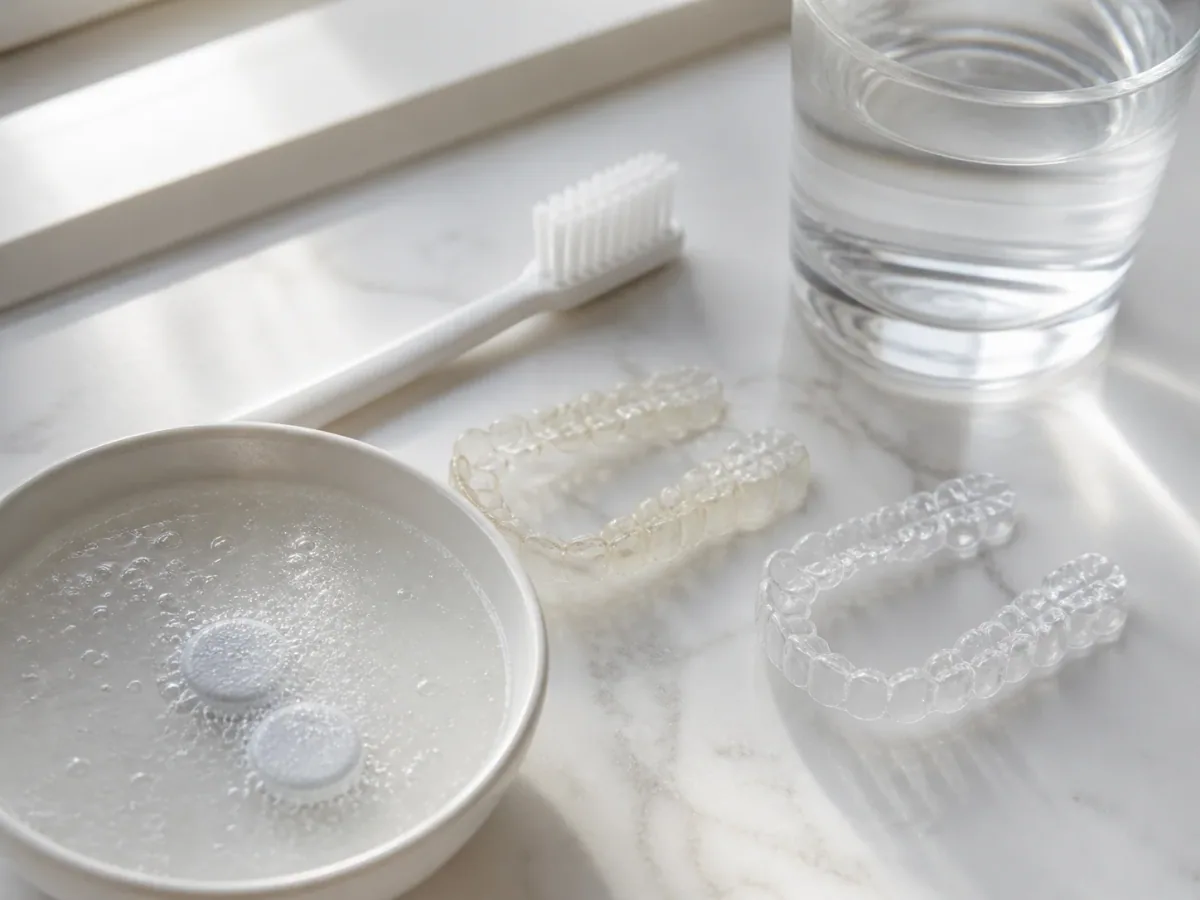
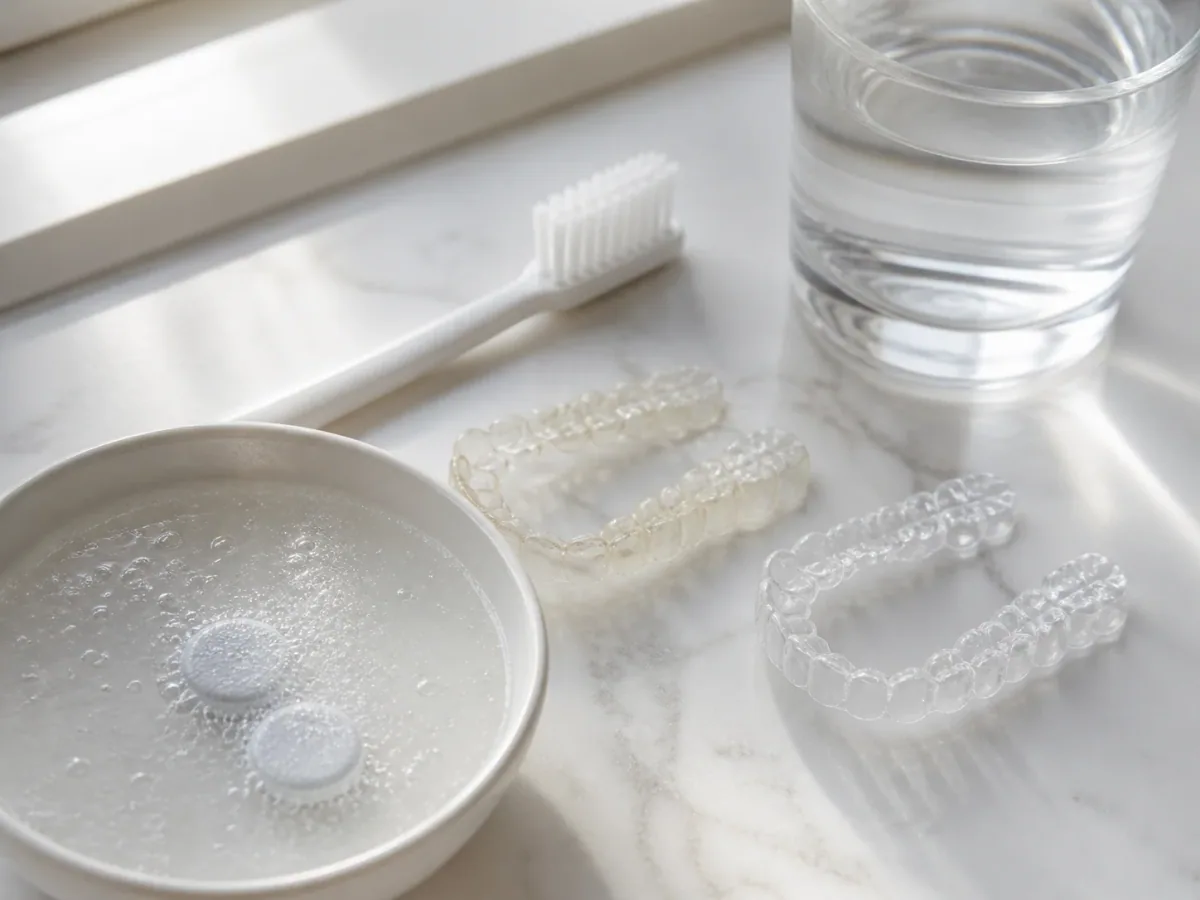
- Soak in a dedicated cleaner. Invisalign Cleaning Crystals, Retainer Brite, or any major aligner-specific cleaning tablet works. Dissolve one tablet in lukewarm water and submerge the trays for 15 to 20 minutes. Follow the package instructions for your specific brand.
- Brush after soaking. The soak loosens the biofilm; the brush physically lifts it off. Skip the brush and you will be left with a faint film that picks up new pigment quickly.
- Rinse and dry. Pat the trays dry with a clean cloth or air-dry on a paper towel. Wet plastic stored in a closed case is the fastest way to grow bacteria and odor.
For really stubborn stains around the gumline or attachments, a soft children’s toothbrush and a tiny amount of clear soap, applied directly to the stain with gentle circular pressure, almost always lifts the last of the discoloration.
What to Avoid
Three common cleaning products do more harm than good:
- Whitening or abrasive toothpaste. The same micro-abrasive particles that polish enamel scratch SmartTrack plastic. Scratched trays trap more pigment and become permanently cloudy.
- Mouthwash with dyes or alcohol. Colored mouthwashes (blue, green, purple) deposit pigment directly into the plastic. Alcohol can dry out the material over time. If you use mouthwash, rinse with plain water before reinserting your trays.
- Hot water, boiling water, or dishwashers. Heat warps the plastic. Even one accidental hot rinse can permanently change the fit and force you to order a replacement tray.
Habits That Keep the Next Set Clear
The trays you wear next week will stay invisible if you build three habits now:
- 1Take the trays out for everything except plain water. Coffee, tea, juice, soda, sparkling water with flavor, even iced water at a restaurant that might have a lemon wedge: trays out. Reinserting takes ten seconds; replacing stained trays mid-treatment is a real headache.
- 2Rinse your mouth before reinserting. A 5-second water swish washes away the pigments still on your teeth from the meal you just finished. This single habit prevents most of the gumline staining patients ask us about.
- 3Use the case, every time. A tray sitting on a napkin while you eat lunch picks up stains and bacteria from the napkin, the table, and the air. The case keeps the plastic clean and dry.
A clean Invisalign case matters as much as the trays. Per Dr. Pinhasov, “the case can be cleaned using a toothbrush and a bit of toothpaste. Simply brush and rinse the case, and it will be clean.” A weekly case cleaning prevents the trays from being recontaminated every time you store them.
“Invisalign is generally safe, but maintaining good oral hygiene during treatment is crucial. Poor oral hygiene with either braces or Invisalign can lead to periodontal issues, which might result in gum recession.”
Dr. Boris Pinhasov, DDS, Board-Certified Orthodontist, BP Smiles Orthodontics
When to Replace Stained Trays Instead of Cleaning
Cleaning works for surface stains and biofilm. It does not work for:
- Cracks, warping, or visible scratches in the plastic itself. Replace, do not clean.
- Trays you have worn well past their two-week mark due to lost or damaged sets. The plastic loses elasticity over time and stops moving teeth efficiently.
- Trays with deep yellow-brown pigment that does not respond to two consecutive deep cleans, which usually means the plastic is scratched and pigment is sitting inside the surface damage.
If you are within a few days of switching to your next set anyway, a cosmetic stain is not worth a replacement. If you have a week or more left in the current tray, give the deep-clean routine one careful try before contacting your orthodontist for a replacement.
BP Smiles Orthodontics in Queens, NY
BP Smiles Orthodontics is a single-location orthodontic practice at 208-09 Union Turnpike in Queens, NY 11364. Dr. Boris Pinhasov is a Board-Certified Orthodontist (ABO Diplomate), with more than 15 years of clinical experience. Our patients come from Kew Gardens, Oakland Gardens, Bayside Hills, Flushing, Queens Village, and surrounding neighborhoods along Union Turnpike. We see Invisalign and braces patients of all ages and offer interest-free in-house financing on every treatment.
If your trays are stained and the home cleaning routine is not restoring them, or if you are starting Invisalign treatment and want to set up your hygiene routine right from day one, schedule a free consultation. Our team speaks English, Russian, and Spanish.
Schedule a Free Invisalign Consultation
Or call 718-290-9444
Can I use mouthwash to clean my Invisalign trays?
Most mouthwashes contain dyes (blue, green, purple) and alcohol that either pigment the plastic or dry it out over time. If you want to soak your trays in a liquid, use a dedicated aligner cleaning tablet (Invisalign Cleaning Crystals or Retainer Brite) dissolved in cool water. If you use mouthwash for your own oral care, rinse with plain water before reinserting your trays.
Why are my Invisalign trays cloudy after only a few days?
A milky or cloudy appearance is biofilm build-up, not the plastic itself wearing out. It usually means the trays are not being brushed at least twice a day, or that food and drink other than plain water is reaching them while they are in your mouth. The 4-step daily routine above clears it up within one or two cleanings.
Can I use toothpaste to clean my aligners?
No. Most toothpastes contain micro-abrasive particles that polish enamel and scratch the SmartTrack plastic. Once the plastic is scratched, new stains settle into the surface damage and become permanent. Use clear, fragrance-free liquid soap or a soft brush with water only.
How often should I deep-clean my Invisalign trays with cleaning tablets?
Once or twice a week is the right cadence for most patients. Daily brushing handles the surface biofilm; weekly soaking lifts the deeper residue that accumulates between cleanings.
Will stains from coffee or tea damage the trays permanently?
Surface stains are almost always reversible with a deep clean. Permanent damage happens only when the plastic itself is scratched (usually by abrasive toothpaste), warped (by hot water), or cracked. If your trays are intact, even heavy stains usually clean up.
Should I rinse my Invisalign trays with hot water to sterilize them?
Never. Hot water warps Invisalign plastic and changes the fit, which means the tray no longer moves your teeth correctly. Cool to lukewarm water only, every time.
This information is provided for educational purposes and is not a substitute for professional medical advice, diagnosis, or treatment. Please schedule a consultation with our team to discuss your individual needs.
Ready to Start Your Smile Journey?
Schedule a free consultation with Dr. Boris Pinhasov in Queens.
FAQ
Frequently Asked Questions
Most mouthwashes contain dyes (blue, green, purple) and alcohol that either pigment the plastic or dry it out over time. If you want to soak your trays in a liquid, use a dedicated aligner cleaning tablet (Invisalign Cleaning Crystals or Retainer Brite) dissolved in cool water. If you use mouthwash for your own oral care, rinse with plain water before reinserting your trays.
A milky or cloudy appearance is biofilm build-up, not the plastic itself wearing out. It usually means the trays are not being brushed at least twice a day, or that food and drink other than plain water is reaching them while they are in your mouth. The 4-step daily routine above clears it up within one or two cleanings.
No. Most toothpastes contain micro-abrasive particles that polish enamel and scratch the SmartTrack plastic. Once the plastic is scratched, new stains settle into the surface damage and become permanent. Use clear, fragrance-free liquid soap or a soft brush with water only.
Once or twice a week is the right cadence for most patients. Daily brushing handles the surface biofilm; weekly soaking lifts the deeper residue that accumulates between cleanings.
Surface stains are almost always reversible with a deep clean. Permanent damage happens only when the plastic itself is scratched (usually by abrasive toothpaste), warped (by hot water), or cracked. If your trays are intact, even heavy stains usually clean up.
Never. Hot water warps Invisalign plastic and changes the fit, which means the tray no longer moves your teeth correctly. Cool to lukewarm water only, every time.