
Medically reviewed by Dr. Boris Pinhasov, DDS – American Board of Orthodontics Diplomate | 20+ Years Experience | Last Updated: March 2026
Braces take 12 to 24 months on average, with most patients wearing them for about 18 months. However, treatment time can range from as little as 6 months for minor corrections to 36 months or longer for complex cases. The exact duration depends on your age, the severity of your orthodontic issues, and how well you follow your orthodontist’s instructions.
Understanding what to expect helps you plan for your orthodontic journey. Whether you are a parent researching braces for your child or an adult considering treatment for yourself, this guide explains the factors that affect treatment time and what you can do to stay on schedule.
What Affects How Long You Wear Braces?
Several factors determine your individual treatment timeline. Your orthodontist evaluates all of these during your initial consultation to give you an accurate estimate.
- Severity of Misalignment is the biggest factor. Mild crowding or small gaps may only need 6 to 12 months of treatment. Moderate cases typically require 12 to 18 months. Severe crowding, significant spacing, or rotated teeth may need 18 to 24 months or longer to fully correct.
- Bite Issues add complexity to treatment. Correcting an overbite, underbite, crossbite, or open bite requires moving not just individual teeth but also aligning how your upper and lower jaws fit together. Bite correction often extends treatment time beyond what would be needed for straightening alone.
- Patient Age plays a role because children and teenagers have bones that are still growing. This natural growth can work in favor of treatment, sometimes shortening the timeline. Adults have fully developed bones that are denser and require more time to remodel as teeth move.
- Growth Pattern affects treatment in younger patients. Dr. Boris Pinhasov notes that orthodontic treatment “usually takes anywhere from 12 to 36 months depending on many factors, including the age of the patient, growth pattern, surgical necessity, and more.” Some children benefit from early interceptive treatment followed by a second phase of braces later.
- Type of Braces can influence speed slightly, though all types work effectively. We will cover this in more detail below.
- Patient Compliance is one factor you can control. Wearing rubber bands as directed, avoiding foods that break brackets, keeping appointments, and maintaining good oral hygiene all help keep treatment on track.
How Long Do Braces Take for Minor vs Severe Cases?
Treatment time varies significantly based on how much correction your teeth need.
- Minor Cases (6 to 12 months): If you have slight crowding, small gaps, or one or two teeth that are mildly out of position, treatment may be completed in under a year. These cases require less tooth movement and fewer adjustments.
- Moderate Cases (12 to 18 months): Most orthodontic patients fall into this category. Moderate crowding, noticeable gaps, or mild bite issues typically require about a year to a year and a half of treatment. This is the most common timeline for teenagers getting braces.
- Severe Cases (18 to 36 months): Significant crowding, large gaps, severely rotated teeth, or complex bite problems require extended treatment. Some cases involving jaw discrepancies may need surgical orthodontics, which adds to the overall timeline.
Your orthodontist will give you a personalized estimate after examining your teeth, taking X-rays, and creating a treatment plan. This estimate may be adjusted as treatment progresses based on how your teeth respond.
Do Kids or Adults Wear Braces Longer?
Children and teenagers often complete treatment slightly faster than adults, though the difference is usually a matter of months rather than years.
- Children and Teens benefit from bones that are still growing and more responsive to orthodontic forces. Their teeth tend to move more easily, and the bone around the teeth remodels faster. Many teenagers complete treatment in 18 to 24 months.
- The American Association of Orthodontists recommends children have their first orthodontic evaluation by age 7. Dr. Boris agrees that “7 is the golden number for getting evaluated for the first time by an orthodontist.” Early evaluation allows the orthodontist to identify issues that benefit from early intervention.
- Adults can absolutely achieve excellent results with braces, but treatment may take a few months longer than it would for a teenager with similar issues. Adult bones are fully developed and denser, requiring more time for the remodeling process that allows teeth to move. Adults are also more likely to have had previous dental work like crowns or extractions that can complicate treatment.
That said, many adults complete braces in 18 to 24 months, the same timeframe as teenagers. The difference depends more on the complexity of your case than your age alone.
Which Type of Braces Works Fastest?
All types of braces can achieve excellent results, but there are some differences in treatment speed.
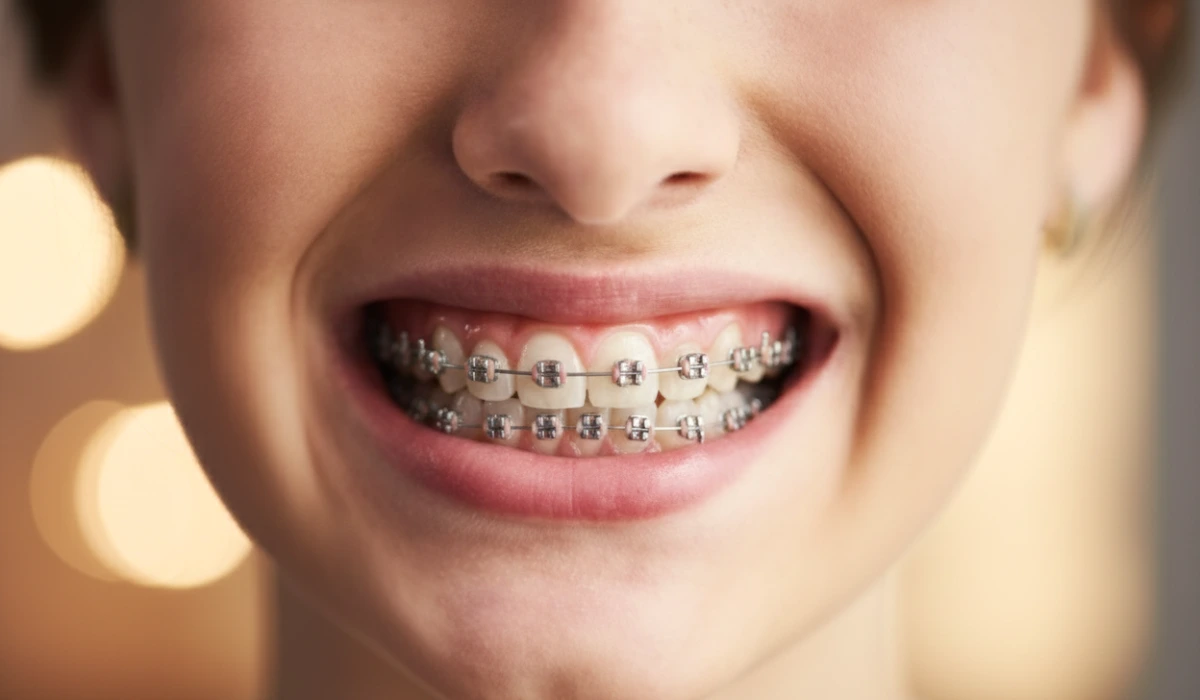
- Traditional Metal Braces remain the fastest option for most cases, especially complex ones. Metal brackets and wires allow orthodontists to apply precise forces and make fine adjustments. For severe crowding or significant bite issues, metal braces often complete treatment faster than alternatives.
- Ceramic Braces work the same way as metal braces but use tooth-colored or clear brackets for a less noticeable appearance. Treatment time is similar to metal braces, though ceramic brackets are slightly more fragile and may require more careful handling.
- Self-Ligating Braces use a special clip mechanism instead of rubber bands to hold the wire in place. Some manufacturers claim faster treatment times, but research shows results are comparable to traditional braces for most patients. The main advantage is often shorter appointment times rather than shorter overall treatment.
- Lingual Braces are placed on the back of teeth for complete invisibility. They work well for many cases but may take slightly longer for complex corrections because adjustments are more difficult to make.
- Clear Aligners (Invisalign) work well for mild to moderate cases and typically complete treatment in 12 to 18 months. However, aligners may not be the best choice for severe crowding or complex bite issues, where traditional braces may be faster and more effective.
At BP Smiles Orthodontics, Dr. Boris recommends the best option for your specific case during your free consultation.
How Often Do You Visit the Orthodontist During Treatment?
Regular adjustment appointments are essential to keep your treatment progressing on schedule. At BP Smiles, most patients visit every 4 to 6 weeks for adjustments.
During these appointments, your orthodontist checks your progress, tightens wires, changes rubber bands, and makes any necessary modifications to your treatment plan. Each adjustment applies new forces to your teeth, guiding them closer to their final positions.
Adjustment appointments are usually quick, typically lasting 15 to 30 minutes. The team at BP Smiles works efficiently while making sure you understand what is happening at each stage of your treatment.
Missing appointments can extend your treatment time. If you cannot make a scheduled visit, reschedule as soon as possible to avoid delays. Consistent appointments keep your treatment on track and help you finish on time.
Can You Make Braces Work Faster?
While you cannot dramatically speed up the biological process of tooth movement, you can take steps to avoid delays and keep your treatment on schedule.
- Wear Rubber Bands as Directed. If your orthodontist prescribes elastics, wear them exactly as instructed. Rubber bands are critical for correcting bite issues, and inconsistent wear is one of the most common reasons treatment takes longer than expected. Some patients wear elastics only when they remember, but part-time wear leads to part-time results.
- Avoid Foods That Break Brackets. Hard, sticky, and crunchy foods can pop brackets off your teeth or bend wires. Each broken bracket means an extra appointment to repair it, and your teeth stop moving properly until the repair is made. Avoid foods like popcorn, hard candy, ice, nuts, caramel, and taffy.
- Keep All Your Appointments. Regular adjustments are necessary to keep teeth moving. Skipping or delaying appointments extends treatment time. If you need to reschedule, do it as soon as possible.
- Maintain Good Oral Hygiene. Brushing and flossing properly prevents cavities and gum problems that can interrupt treatment. If you develop a cavity, your orthodontist may need to remove your braces temporarily for dental work, adding time to your treatment.
- Protect Your Braces During Sports. Wear a mouthguard during physical activities to prevent damage to your braces and mouth.
What Happens If You Wear Braces Longer Than Expected?
Sometimes treatment takes longer than initially estimated. This can happen for several reasons, and it does not mean anything went wrong.
- Your teeth may move slower than expected. Every patient responds to orthodontic forces differently. Some teeth are more resistant to movement, particularly in adults or in cases with dense bone.
- Bite correction may require extra time. Aligning the bite is often more complex than straightening teeth. Your orthodontist may need additional time to fine-tune how your upper and lower teeth fit together.
- Compliance issues can cause delays. If rubber bands were not worn consistently or brackets broke frequently, teeth may not have moved as planned. Your orthodontist may need extra time to get back on track.
- New issues may emerge during treatment. As teeth move, sometimes previously hidden problems become apparent and require additional correction.
If your treatment is taking longer than expected, talk with your orthodontist. They can explain what is happening and give you an updated timeline. The goal is always the best possible result, even if it takes a bit longer to achieve.
Why Choose BP Smiles for Efficient Treatment
At BP Smiles Orthodontics, Dr. Boris Pinhasov combines 20 years of experience with advanced technology to deliver efficient, effective treatment for patients of all ages.
Dr. Boris is a board-certified orthodontist and a Diplomate of the American Board of Orthodontics. As the Director of the Orthodontic Program at Maimonides Medical Center, he stays at the forefront of orthodontic techniques and teaches the next generation of orthodontists.
“Everyone deserves our best, all the time,” says Dr. Boris Pinhasov. “We create personalized treatment plans designed to achieve beautiful results as efficiently as possible.”
BP Smiles uses digital 3D scanning technology to plan treatment with precision, eliminating uncomfortable traditional impressions. Modern, low-profile brackets are more comfortable and can move teeth effectively. The practice has earned over 170 five-star Google reviews from families throughout Queens who praise the efficient appointments and excellent results.
Located at 208-09 Union Turnpike in Flushing, BP Smiles offers flexible scheduling including evening and Sunday appointments. The office serves patients from Bayside, Fresh Meadows, Jamaica, and surrounding Queens neighborhoods.
Schedule your free consultation today to get a personalized treatment timeline for your smile.
Frequently Asked Questions
How long does it take to put braces on?
The appointment to place braces on your teeth takes about one to two hours. Your orthodontist cleans your teeth, bonds the brackets, and threads the wire through each bracket. You will leave the same day with your braces in place.
How long do you wear a retainer after braces?
Most patients wear a retainer full-time for the first few months after braces come off, then transition to nighttime wear. Many orthodontists recommend wearing a retainer at night indefinitely to prevent teeth from shifting back.
Can braces be removed early?
Braces should only be removed when treatment is complete. Removing braces early means your teeth have not reached their final positions and may shift back. If you are unhappy with the length of treatment, talk with your orthodontist about your concerns rather than requesting early removal.
How long do braces take for adults?
Adult braces typically take 18 to 24 months, though this varies based on the complexity of the case. Some adult cases are completed in 12 months, while others require 30 months or more.
What is the shortest time you can have braces?
For very minor corrections, braces can sometimes be completed in as little as 6 months. However, most patients need at least 12 months to achieve stable, lasting results.
Disclaimer
Medically reviewed by Dr. Boris Pinhasov, Board-Certified Orthodontist.
This content is for educational purposes only and is not intended as medical advice, diagnosis, or treatment. Please consult a qualified healthcare provider for personalized recommendations.
