
Medically reviewed by Dr. Boris Pinhasov, DDS – American Board of Orthodontics Diplomate | 20+ Years Experience | Last Updated: March 2026
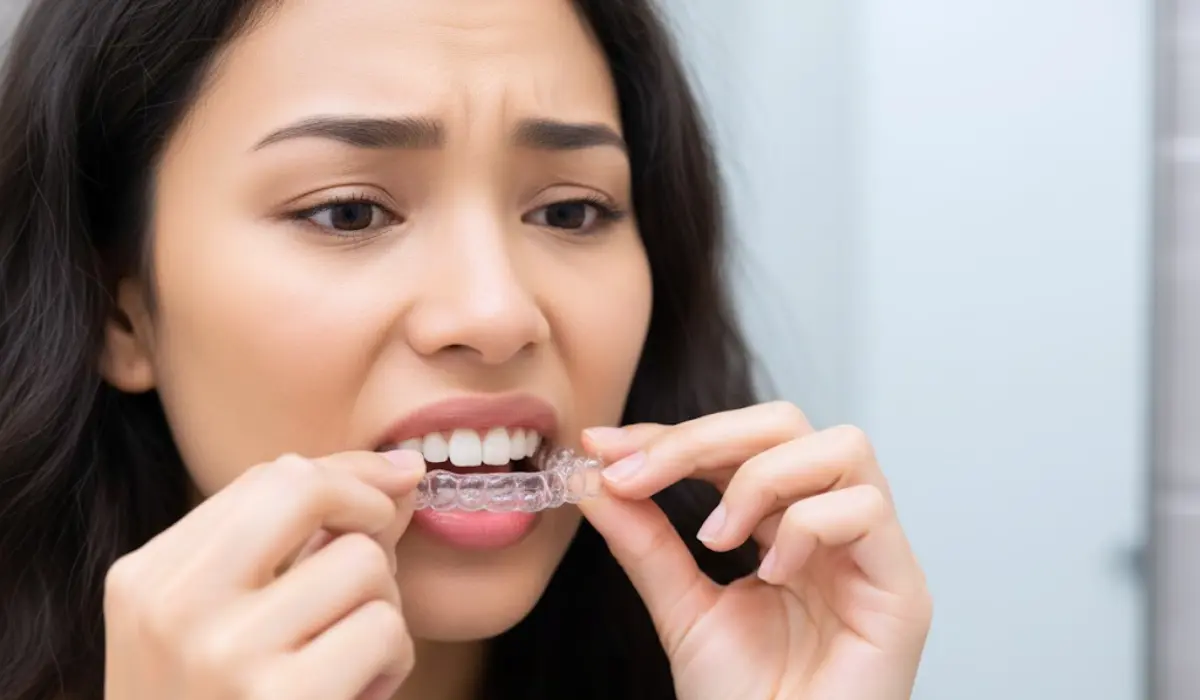
Invisalign does not hurt, but you will feel pressure and mild discomfort, especially during the first few days of treatment and when switching to a new set of aligners. This pressure is completely normal and means your teeth are moving. Most patients describe the sensation as tightness rather than pain, and it typically fades within a few days.
If fear of pain is holding you back from starting Invisalign, this guide will help you understand exactly what to expect. The discomfort is temporary, manageable, and worth it for the results you will achieve.
What Does Invisalign Feel Like?
Invisalign feels like gentle pressure on your teeth. When you put in a new set of aligners, you will notice a snug, tight sensation as the aligners begin to shift your teeth into their new positions.
Most patients describe the feeling as their teeth being “squeezed” or “hugged” by the aligners. This is not sharp or stabbing pain. It is a dull, constant pressure that tells you the treatment is working.
The sensation is most noticeable when your aligners are new. After a day or two, your teeth adjust to the pressure and the tightness fades. By the time you switch to your next set of aligners, the cycle repeats, but many patients find that each new tray feels less uncomfortable than the last as they get used to the process.
When Is Invisalign Most Uncomfortable?
The first week of Invisalign treatment is typically the most uncomfortable. Your mouth is adjusting to having aligners in for 20 to 22 hours a day, and your teeth are experiencing controlled pressure for the first time.
After the initial adjustment period, discomfort is most noticeable during the first one to three days after switching to a new tray. Each new aligner is designed to move your teeth slightly further, so the pressure returns briefly with each change.
If your treatment includes attachments, which are small tooth-colored bumps bonded to certain teeth to help the aligners grip better, you may notice some additional sensitivity. The attachments themselves do not hurt, but they can make the aligners feel tighter.
The good news is that discomfort decreases as you progress through treatment. By the midpoint of your Invisalign journey, many patients barely notice when they switch to new trays.
How Long Does Invisalign Discomfort Last?
Initial adjustment discomfort typically lasts three to seven days. During this first week, your mouth is getting used to wearing aligners, and your teeth are beginning to move.
When you switch to a new tray, discomfort usually lasts one to three days. The first day with new aligners is the tightest, and the pressure gradually decreases as your teeth shift into position.
Here is a general timeline of what to expect:
- Day 1 with new aligners: Tightest sensation, most noticeable pressure
- Days 2 to 3: Pressure begins to ease, aligners feel more comfortable
- Days 4 to 7: Aligners fit well, minimal discomfort
- Days 7 to 14: Ready for next tray (your orthodontist determines your specific schedule)
By mid-treatment, the adjustment period with each new tray often shortens because your teeth are accustomed to moving and your mouth is used to wearing aligners.
How to Relieve Invisalign Discomfort
There are several simple ways to manage any discomfort you experience during Invisalign treatment.
- Switch to new aligners at night. Put in your new trays right before bed so you sleep through the hours when they feel tightest. By morning, the initial pressure will have eased.
- Use over-the-counter pain relievers if needed. Ibuprofen or acetaminophen can help if discomfort is bothering you, especially during the first few days with new aligners. Follow the dosage instructions on the package.
- Drink cold water. Cold water can soothe your gums and help reduce any inflammation. Some patients find that sucking on ice chips also provides relief.
- Use orthodontic wax. If the edges of your aligners feel rough or irritate your cheeks or gums, apply a small amount of orthodontic wax to the area. This creates a smooth barrier between the aligner and your soft tissue.
- Use chewies to seat your aligners. Chewies are small foam cylinders you bite down on to help your aligners fit snugly against your teeth. Properly seated aligners are more comfortable and more effective.
- Avoid very hard or crunchy foods. When your teeth are sore from new aligners, stick to softer foods for a day or two. This reduces additional pressure on sensitive teeth.
Does Invisalign Hurt More Than Braces?
Most patients report that Invisalign is more comfortable than traditional braces.
With braces, metal brackets are bonded to your teeth and connected by wires. These brackets and wires can rub against your cheeks, lips, and tongue, causing sores and irritation. Braces also require periodic tightening, which can cause significant soreness for several days after each adjustment.
Invisalign aligners are smooth plastic with no sharp edges. There are no brackets to irritate your mouth and no wires to poke your cheeks. The pressure from Invisalign is gradual and controlled, distributed evenly across your teeth rather than concentrated at specific points.
While both treatments involve some discomfort because teeth are being moved, the overall experience with Invisalign tends to be gentler. Many patients who have had both braces and Invisalign say clear aligners were noticeably more comfortable.
What If Invisalign Pain Is Severe?
Mild pressure and discomfort are normal. Severe pain is not.
If you experience sharp, intense pain that does not improve after a few days, something may be wrong. Contact your orthodontist if you notice aligners that do not fit properly or feel extremely tight, sharp edges cutting into your gums or cheeks, pain that gets worse instead of better over time, or bleeding, swelling, or signs of infection.
These symptoms are rare, but they should be addressed promptly. Your orthodontist can check your aligners, make adjustments, or smooth any rough edges to resolve the issue.
At BP Smiles Orthodontics, Dr. Boris Pinhasov monitors your progress at every visit to ensure your treatment is comfortable and on track. If you ever have concerns between appointments, our team is here to help.
Comfortable Invisalign Treatment at BP Smiles Orthodontics
At BP Smiles Orthodontics in Queens, we prioritize your comfort throughout your Invisalign journey.
Dr. Boris Pinhasov is an ABO board-certified orthodontist with over 20 years of experience. Board certification is a distinction fewer than one in three orthodontists achieve, reflecting a commitment to the highest standards of patient care. As a certified Invisalign provider, Dr. Pinhasov has helped countless patients achieve straighter smiles with clear aligners.
We use the Lumina Itero scanner for precise digital impressions, which means no uncomfortable goopy molds. The 3D scan creates an accurate representation of your teeth and allows you to see your projected results before treatment begins.
Patients appreciate Dr. Pinhasov’s gentle, patient-focused approach. With over 170 five-star Google reviews and a 5.0 rating, BP Smiles has earned the trust of families throughout Queens, Flushing, and Bayside.
If you are worried about pain or discomfort, schedule a free consultation to have your questions answered. We will explain exactly what to expect so you can start treatment with confidence.
FAQs About Invisalign Pain and Discomfort
Is the first week of Invisalign the worst?
For most patients, yes. The first week involves the biggest adjustment as your mouth gets used to wearing aligners and your teeth start moving. After this initial period, discomfort with each new tray is typically milder and shorter.
Can I take pain medication with Invisalign?
Yes. Over-the-counter pain relievers like ibuprofen or acetaminophen are safe to use if you experience discomfort. Follow the dosage instructions and use them as needed, especially during the first few days with new aligners.
Do attachments make Invisalign more painful?
Attachments can make aligners feel tighter because they provide additional grip for more complex tooth movements. However, they do not cause significant additional pain. Any extra discomfort is mild and temporary.
Does removing Invisalign hurt?
Removing your aligners should not hurt. It may feel slightly tight, especially with new trays, but it becomes easier with practice. Your orthodontist will show you the proper technique for removing aligners comfortably.
What should I do if my aligners have sharp edges?
If you notice a rough or sharp edge on your aligners, use orthodontic wax to cover the area temporarily and contact your orthodontist. They can smooth the edge or provide a replacement aligner if needed.
Disclaimer
Medically reviewed by Dr. Boris Pinhasov, Board-Certified Orthodontist.
This content is for educational purposes only and is not intended as medical advice, diagnosis, or treatment. Please consult a qualified healthcare provider for personalized recommendations.
