
Medically reviewed by Dr. Boris Pinhasov, DDS – American Board of Orthodontics Diplomate | 20+ Years Experience | Last Updated: March 2026
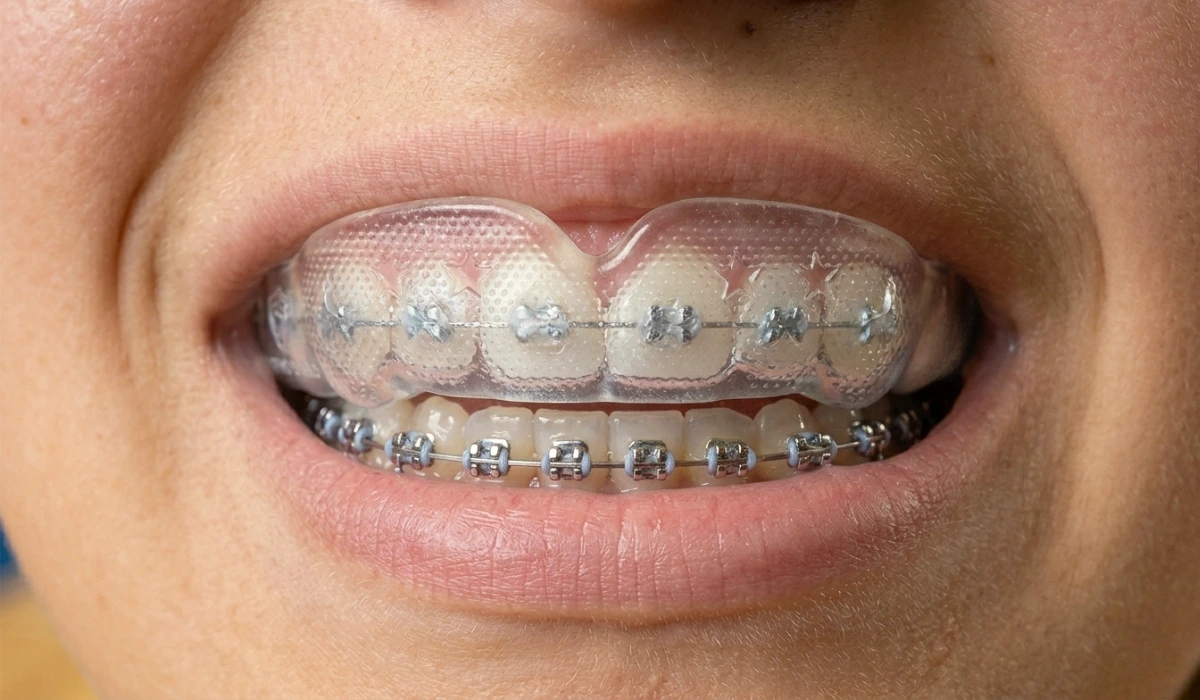
Yes, you can and should wear a mouthguard with braces. In fact, wearing a mouthguard is even more important when you have braces because the brackets and wires can cause serious cuts to your lips and cheeks if you take a hit to the face. Orthodontic mouthguards are designed to fit comfortably over braces while providing essential protection during sports.
If you or your child plays sports, a mouthguard is not optional during orthodontic treatment. The right mouthguard protects your teeth from damage, your braces from breaking, and your mouth from painful lacerations.
Why You Need a Mouthguard With Braces
Playing sports with braces without a mouthguard puts you at serious risk for injury. The metal brackets and wires that straighten your teeth can cause significant damage to the soft tissues of your mouth if you are hit.
Risks of not wearing a mouthguard with braces:
Severe cuts to lips, cheeks, and tongue from brackets and wires. Broken or knocked-out teeth from impact. Damaged brackets that require emergency repair and delay treatment. Bent wires that can no longer move teeth properly. Painful injuries that could have been prevented.
A mouthguard acts as a cushion between your braces and the soft tissues of your mouth. It absorbs and distributes the force of impact, protecting both your teeth and your orthodontic appliances.
Even if you never wore a mouthguard before getting braces, you should start now. The combination of impact plus metal brackets creates a much higher risk of injury than bare teeth alone.
Can You Use a Regular Mouthguard With Braces?
No, regular mouthguards are not designed to fit over braces and should not be used. Standard boil-and-bite mouthguards are molded to fit tightly around teeth, which does not work when brackets are attached to the front of your teeth.
Problems with regular mouthguards and braces:
They do not accommodate the extra bulk of brackets and wires. They can damage brackets or pop them off. They fit uncomfortably and may not stay in place. They do not provide proper protection because of poor fit.
If you try to use a regular mouthguard with braces, you may end up with a mouthguard that does not fit, does not protect you properly, and may actually cause damage to your orthodontic appliances.
You need a mouthguard specifically designed for braces, often called an orthodontic mouthguard or braces mouthguard.
Best Mouthguards for Braces
Several types of mouthguards work well with braces. The best choice depends on your sport, your budget, and your orthodontist’s recommendations.
Orthodontic mouthguards (over-the-counter):
Designed specifically for people with braces. Made of flexible silicone that accommodates brackets and wires. Available at sporting goods stores and pharmacies. Brands like Shock Doctor, SISU, and Oral Mart make braces-specific options. Typically cost $15 to $40. Good option for recreational athletes and growing kids whose teeth are still moving.
Custom-fitted mouthguards:
Made by your dentist or orthodontist from impressions of your teeth. Provide the best fit and protection. More comfortable than over-the-counter options. Ideal for serious athletes and contact sports. Typically cost $100 to $300. May need to be remade as teeth move during treatment.
Boil-and-bite orthodontic mouthguards:
A middle-ground option between basic and custom. Designed to mold over braces when heated. Can be remolded as teeth shift during treatment. Typically cost $20 to $50. Good balance of fit, protection, and affordability.
For most patients with braces, an over-the-counter orthodontic mouthguard provides adequate protection. Athletes in high-contact sports like football, hockey, or wrestling may benefit from custom-fitted mouthguards.
How to Mold a Mouthguard Over Braces
If you choose a boil-and-bite orthodontic mouthguard, proper molding is essential for a good fit. The process is slightly different than molding a regular mouthguard.
Steps to mold an orthodontic mouthguard:
- Boil water and let it cool for the time specified in the instructions (usually 30 to 60 seconds after removing from heat).
- Place the mouthguard in the hot water for the recommended time (usually 30 to 60 seconds).
- Remove the mouthguard and let it cool for a few seconds until it is warm but not hot enough to burn.
- Place the mouthguard over your upper teeth and braces. Press it against your teeth with your fingers, not by biting down hard.
- Use your tongue to press the mouthguard against the roof of your mouth.
- Gently close your teeth together, but do not bite down forcefully. Hard biting can damage brackets.
- Hold in place for 30 to 60 seconds until the mouthguard sets.
- Remove and place in cold water to fully set the shape.
Important tips:
Do not bite down hard when molding, as this can break brackets. If the fit is not right, many orthodontic mouthguards can be reheated and remolded. As your teeth move during treatment, you may need to remold or replace your mouthguard for proper fit.
Which Sports Require a Mouthguard?
Any sport with risk of contact or impact to the face should be played with a mouthguard when you have braces.
High-risk sports (mouthguard essential):
Football, hockey, lacrosse, boxing, martial arts, wrestling, rugby, basketball, soccer, field hockey, water polo.
Moderate-risk sports (mouthguard recommended):
Baseball, softball, volleyball, gymnastics, skateboarding, BMX biking, mountain biking, skiing, snowboarding, horseback riding, trampolining.
Lower-risk activities:
Track and field, swimming, tennis, golf. While mouthguards are less common in these sports, any activity where a fall or collision could occur may warrant protection.
When in doubt, wear a mouthguard. The inconvenience of wearing one is nothing compared to the pain and expense of a dental injury.
What Happens If You Get Hit in the Mouth With Braces?
An impact to the mouth with braces and no mouthguard can cause injuries that range from minor to severe.
Possible injuries:
Cuts and lacerations to lips, cheeks, and tongue from brackets and wires. Loose, cracked, or knocked-out teeth. Broken brackets that require repair. Bent or broken wires. Damage to roots of teeth. Jaw injuries.
What to do if you are hit in the mouth:
Check for loose or knocked-out teeth. Apply pressure to any bleeding with clean gauze or cloth. Use ice to reduce swelling. Contact your orthodontist to report the injury and schedule an evaluation. If a tooth is knocked out, try to preserve it in milk and seek emergency dental care immediately.
Wearing a mouthguard prevents most of these injuries. The cost of a mouthguard is far less than the cost of emergency dental treatment and the delays to your orthodontic care.
Caring for Your Orthodontic Mouthguard
Proper care keeps your mouthguard clean, effective, and long-lasting.
After each use:
Rinse with cool water immediately after removing. Brush gently with a toothbrush and toothpaste. Allow to air dry completely before storing.
Regular maintenance:
Store in a ventilated case to prevent bacteria growth. Keep away from heat, which can warp the shape. Inspect regularly for wear, tears, or poor fit. Replace if damaged or if it no longer fits properly.
When to replace:
When the fit becomes loose as your teeth move. If the mouthguard shows signs of wear or damage. At least once per sports season for growing athletes. When your orthodontist recommends a new one.
Bring your mouthguard to your orthodontic appointments. Your orthodontist can check the fit and let you know if it needs adjustment or replacement.
Dr. Boris’s Recommendations for Athletes
At BP Smiles Orthodontics, we support our patients in staying active throughout their orthodontic treatment. Dr. Boris Pinhasov encourages athletes to continue playing sports with proper protection.
“Everyone deserves our best, all the time,” says Dr. Boris Pinhasov. “We want our patients to enjoy their favorite activities safely. A good mouthguard is essential for any athlete with braces.”
Dr. Boris is a board-certified orthodontist and a Diplomate of the American Board of Orthodontics with 20 years of experience treating athletes of all ages. He can recommend the best mouthguard option based on your sport, your treatment plan, and your individual needs.
BP Smiles has earned over 170 five-star Google reviews from Queens families who appreciate the personalized care and practical guidance. Whether you play football, basketball, soccer, or any other sport, we will help you protect your smile while staying in the game.
Located at 208-09 Union Turnpike in Flushing, BP Smiles offers free consultations where you can discuss mouthguard options and any other concerns about orthodontic treatment. Evening and Sunday appointments are available to fit your busy schedule.
Frequently Asked Questions
Can you play sports with braces?
Yes, you can play sports with braces. There is no need to stop athletic activities during orthodontic treatment. You simply need to wear a proper mouthguard to protect your teeth and braces from injury.
Do orthodontists give you a mouthguard?
Some orthodontists provide mouthguards or can order custom-fitted mouthguards for their patients. Ask your orthodontist about mouthguard options. If they do not provide mouthguards, they can recommend where to purchase an appropriate orthodontic mouthguard.
How much does a mouthguard for braces cost?
Over-the-counter orthodontic mouthguards typically cost $15 to $40. Custom-fitted mouthguards made by a dentist or orthodontist cost $100 to $300. The best choice depends on your sport and level of activity.
Can you wear Invisalign as a mouthguard?
No, Invisalign aligners are not designed to protect against impact and should not be used as mouthguards. If you have Invisalign, remove your aligners before sports and wear a proper mouthguard instead.
What if my mouthguard does not fit after my teeth move?
As your teeth shift during treatment, your mouthguard may no longer fit properly. Many boil-and-bite mouthguards can be reheated and remolded. If remolding does not work, you may need to purchase a new mouthguard.
Disclaimer
Medically reviewed by Dr. Boris Pinhasov, Board-Certified Orthodontist.
This content is for educational purposes only and is not intended as medical advice, diagnosis, or treatment. Please consult a qualified healthcare provider for personalized recommendations.
