
Orthodontic Blog
Can You Get Invisalign If You Have Dental Implants?
Yes, Invisalign works for patients with dental implants. The implant cannot be moved, but surrounding teeth can be aligned around it. Queens orthodontist explains.
- Dr. Boris Pinhasov, DDS
- April 30, 2026
- 11:00 am
Medically reviewed by Dr. Boris Pinhasov, DDS, Board-Certified Orthodontist (ABO Diplomate) | 15 Years of Experience | Last Updated: June 2026
Quick Answer
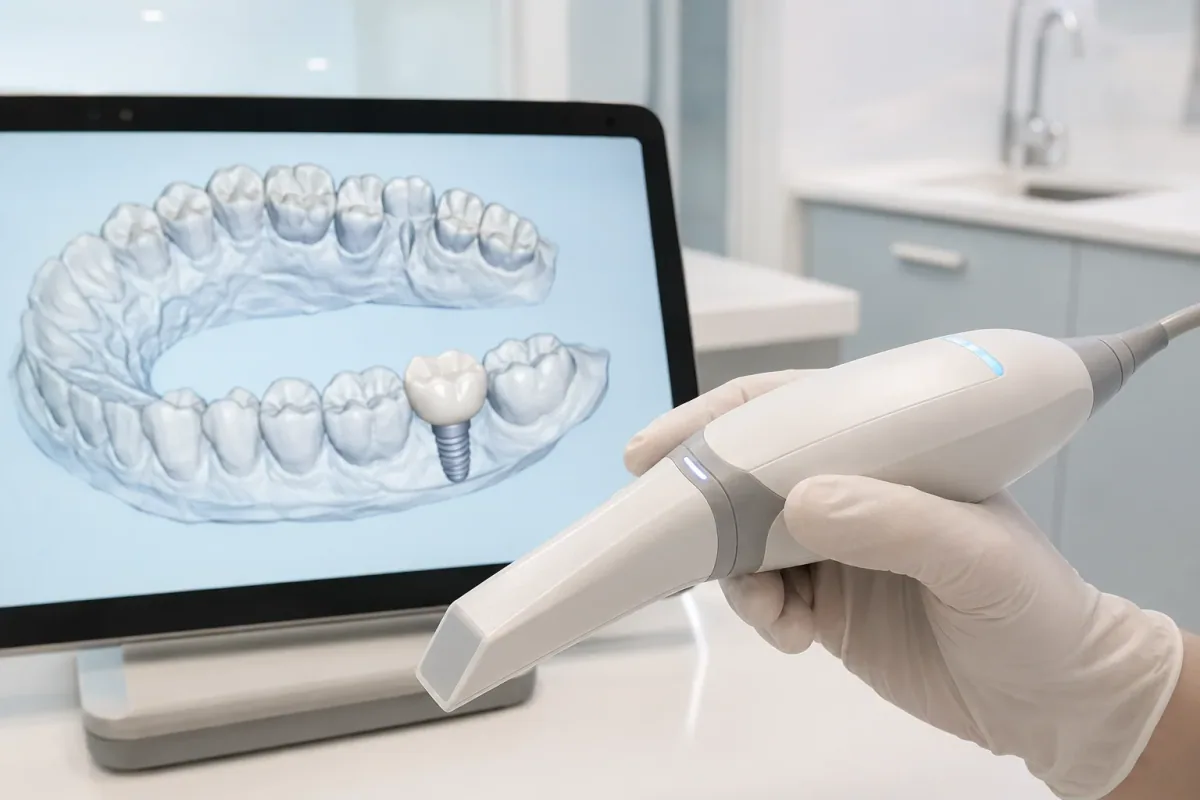
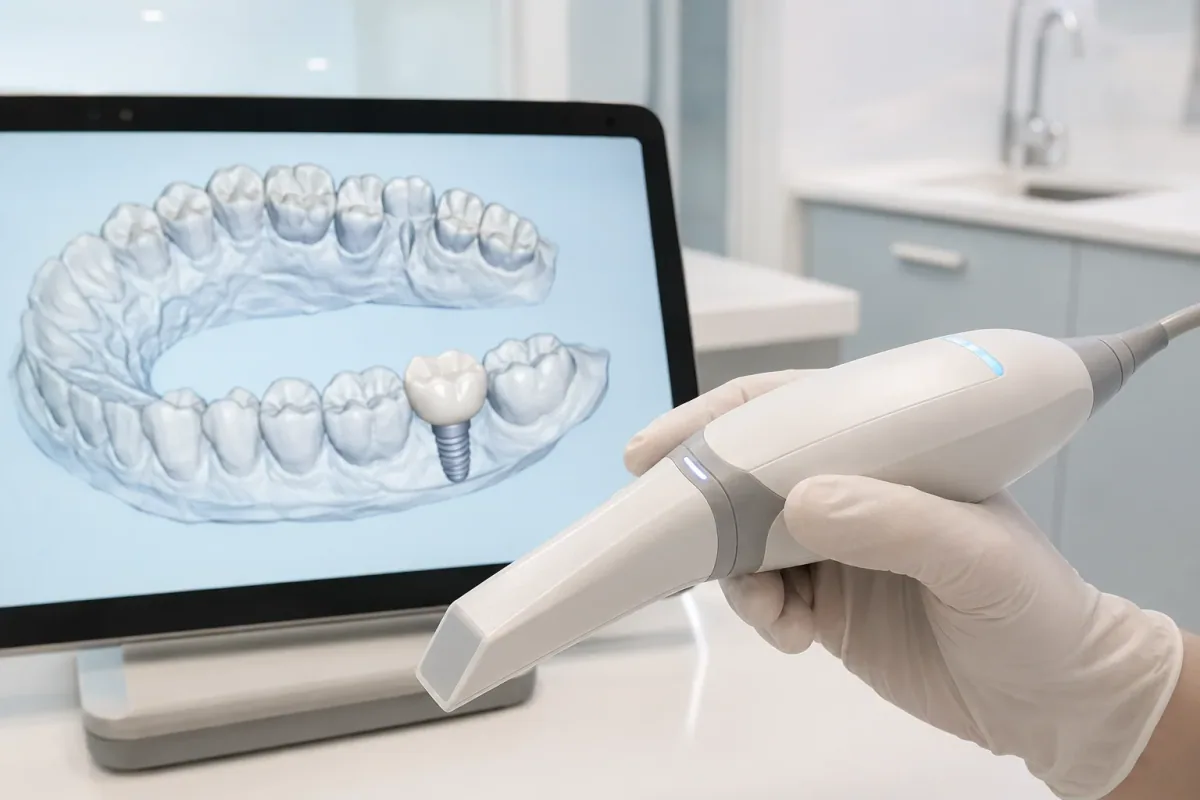
Yes, you can get Invisalign if you have dental implants, and Dr. Pinhasov often prefers Invisalign over braces for these patients. The key constraint is that the implant itself cannot be moved. The natural teeth surrounding the implant can still be repositioned, and your bite can still be improved, but treatment planning must be designed around the implant’s fixed position. A consultation with an iTero scan reveals exactly what is possible in your specific case.
Dental implants and Invisalign work together more easily than most patients expect. Unlike traditional braces, which need brackets bonded to every tooth surface, Invisalign trays slip over the entire arch as one unit. That means an implant crown does not interfere with the trays the same way it can interfere with bracket placement. For patients with one or more implants who still need orthodontic correction, clear aligners are often the cleanest path forward.
The constraint that does not go away is biological: implants fuse directly to the jawbone in a process called osseointegration. They cannot be moved by orthodontic forces, no matter how the trays are designed. What this means in practice, and how Dr. Pinhasov plans treatment around it, is the focus of this guide.
Why Invisalign Is Often Preferred for Patients With Implants
Per Dr. Pinhasov, “Invisalign is a great option for patients with crowns because it doesn’t attach directly to the teeth like traditional braces. Invisalign is usually my preferred treatment for patients with multiple crowns or veneers.” The same logic extends to implant crowns.
The advantage comes from how Invisalign delivers force. Brackets need to bond to natural enamel to grip and pull the tooth. Crowns and implant restorations are made of porcelain, zirconia, or metal, and dental adhesive does not bond as reliably to these surfaces as it does to enamel. While there are special primers and bonding agents that can attach brackets to crowns, the bond is generally weaker, and bracket failures are more common during treatment.
Invisalign sidesteps the bonding question entirely. The trays apply gentle pressure across the entire arch by their shape alone. The implant crown gets exactly the same surrounding pressure as a natural tooth, and there is no bonded hardware to fail or break.
What Cannot Change: The Implant Itself Stays Put
This is the fundamental limit of any orthodontic treatment, braces or Invisalign, in a patient with implants. Per Dr. Pinhasov: “patients with dental implants can still get braces to improve the alignment of their teeth. However, implants themselves cannot be moved. We can only adjust the neighboring teeth and improve the bite.”
The reason is anatomical. Natural teeth sit in a small ligament cushion called the periodontal ligament. When orthodontic force is applied, the bone on one side of the tooth dissolves slightly while new bone forms on the other side, allowing the tooth to drift through the bone over weeks. Implants do not have a periodontal ligament. The titanium post is fused directly to the bone, and there is no biological mechanism for it to move.
What this means for treatment planning:
- The implant becomes the anchor. Because it cannot move, the orthodontist designs the treatment to bring the surrounding teeth into correct alignment around the implant.
- The bite can still be corrected, by repositioning the upper and lower natural teeth so they meet the implant crown correctly.
- Spacing and crowding can still be addressed on the natural teeth, just not on the implant tooth itself.
- Cosmetic alignment of the smile arc is usually achievable, though the implant’s exact position is locked in.
When Implants Are Already in Place
Most patients we see in our Queens office fall into this category: the implant was placed months or years ago, has fully integrated with the bone, and now the patient wants Invisalign for the rest of their teeth.
The treatment workflow looks like this:
- 1iTero Lumina scan. A 3D scan of the entire mouth, including the implant crown, captures the current position of every tooth and the exact location of the implant.
- 2ClinCheck simulation. Dr. Pinhasov designs a treatment plan that holds the implant in place while moving the surrounding teeth into the desired final alignment. The simulation shows the projected end result before any aligners are made.
- 3Patient approval. You see the projected outcome and decide whether the result is what you want.
- 4Aligner manufacturing. Once approved, the patient-specific aligners are manufactured. Per Dr. Pinhasov: “after we scan the patient’s teeth using our advanced scanner, it typically takes about two weeks to receive the Invisalign trays and start the treatment.”
- 5Treatment. Trays are switched on the schedule Dr. Pinhasov sets, generally every two weeks.
When Implants Are Planned for the Future
If you need an implant but have not had it placed yet, the order of operations matters. In most cases, the orthodontist will recommend completing the orthodontic alignment first, then placing the implant in its final position. The reason: once the implant is placed, it cannot move, so it is much easier to position teeth around a planned implant site than to try to fit an implant into the gap left by a treatment plan that did not account for it.
Your orthodontist and your implant dentist or oral surgeon should coordinate on the sequence and timing. At BP Smiles, we work directly with the restorative dentists most of our patients see, and we time orthodontic treatment to leave the right space, in the right position, for the planned implant.
What If You Have Multiple Implants?
Multiple implants make orthodontic planning more constrained but rarely impossible. The same principle applies: each implant is a fixed anchor. The treatment is designed around all of them simultaneously.
For patients with implants in critical anchor positions (front teeth, posterior molars), Invisalign is often the most flexible option because it does not require bonding to any individual tooth and can apply distributed force across the arch. For patients with several implants spaced throughout the mouth, treatment focuses on bite correction, smile arc, and alignment of the natural teeth that remain.
“Yes, patients with dental implants can still get braces to improve the alignment of their teeth. However, implants themselves cannot be moved. We can only adjust the neighboring teeth and improve the bite.”
Dr. Boris Pinhasov, DDS, Board-Certified Orthodontist, BP Smiles Orthodontics
Cost and Insurance Considerations
Invisalign cost at BP Smiles depends on case complexity, not on whether you have implants. The presence of an implant does not change the price of the aligners themselves. What can change cost is the number of aligners required for a given case and the length of treatment.
Many dental insurance plans include orthodontic benefits that apply to Invisalign treatment. Per Dr. Pinhasov, “some insurances have orthodontic benefits which include Invisalign treatment.” The specifics depend on the individual plan. We verify benefits before any consultation, so you know exactly what is covered and what is not.
For the portion not covered by insurance, BP Smiles offers interest-free in-house financing tailored to each patient’s situation.
When Invisalign Might Not Be the Right Option
A few situations push the decision toward braces or another approach:
- Severe bite issues that require significant tooth movement at angles Invisalign cannot achieve efficiently. These cases are uncommon but real, and they are identified during the consultation.
- Active periodontal disease. Per Dr. Pinhasov: “we cannot begin orthodontic treatment if a patient has active periodontal disease. The condition must be resolved by a periodontist or general dentist first.” This applies to braces and Invisalign equally.
- Patients who will not wear the trays 22 hours per day. Invisalign only works if it is in your mouth almost all the time. For patients who know they will not be that compliant, traditional braces (which cannot be removed) are sometimes the better choice.
BP Smiles Orthodontics in Queens, NY
BP Smiles Orthodontics is located at 208-09 Union Turnpike, Queens NY 11364. Dr. Boris Pinhasov is a Board-Certified Orthodontist (ABO Diplomate), with more than 15 years of clinical experience treating Invisalign patients including those with dental implants, crowns, veneers, and other restorations. Our patients come from Kew Gardens, Oakland Gardens, Bayside Hills, Flushing, Queens Village, and surrounding neighborhoods along Union Turnpike. We offer free consultations including iTero scans and interest-free in-house financing on every treatment.
If you have one or more dental implants and are wondering whether Invisalign can work for you, the only way to know for sure is a consultation with an iTero scan. We can show you exactly what your treatment plan would look like, what is achievable around your implants, and what the timeline and investment would be.
Book a Free Invisalign Consultation
Or call 718-290-9444
Can Invisalign move a dental implant?
No. Implants are fused directly to the jawbone and have no periodontal ligament, which is the biological structure that allows natural teeth to be repositioned by orthodontic force. The implant stays in its original position throughout treatment, and the surrounding natural teeth are aligned around it.
Are Invisalign attachments a problem on teeth next to an implant?
Generally no. Invisalign attachments (small tooth-colored bumps bonded to specific teeth to help the trays grip) are placed on natural teeth surrounding the implant, not on the implant crown itself. The treatment plan accounts for which teeth need attachments and where.
Will Invisalign loosen my dental implant?
Invisalign applies gentle, distributed pressure across the arch. It is not designed to loosen implants and, in a healthy implant fully integrated with bone, it does not. If an implant is already failing or partially loose due to bone loss or infection, that condition needs to be addressed by your implant dentist or periodontist before any orthodontic treatment begins.
Should I get the implant before or after Invisalign?
If the implant is not yet placed, the orthodontic treatment usually comes first. Aligning the natural teeth establishes the correct position and spacing for the implant, so the implant can be placed in its ideal location once orthodontic treatment is complete. If the implant is already in place, Invisalign treatment is planned around it.
Can I get Invisalign if I have multiple implants?
Yes, in most cases. Multiple implants add constraints to the treatment plan but rarely make Invisalign impossible. A consultation and iTero scan reveal whether the natural teeth can be aligned around the fixed implant positions to achieve the bite and aesthetic result you want.
How much does Invisalign cost for patients with dental implants?
Cost depends on case complexity, not on the presence of implants. Many insurance plans include orthodontic benefits that apply to Invisalign. BP Smiles offers interest-free in-house financing for the patient portion. Specifics are reviewed at your free consultation.
This information is provided for educational purposes and is not a substitute for professional medical advice, diagnosis, or treatment. Please schedule a consultation with our team to discuss your individual needs.
Ready to Start Your Smile Journey?
Schedule a free consultation with Dr. Boris Pinhasov in Queens.
FAQ
Frequently Asked Questions
No. Implants are fused directly to the jawbone and have no periodontal ligament, which is the biological structure that allows natural teeth to be repositioned by orthodontic force. The implant stays in its original position throughout treatment, and the surrounding natural teeth are aligned around it.
Generally no. Invisalign attachments (small tooth-colored bumps bonded to specific teeth to help the trays grip) are placed on natural teeth surrounding the implant, not on the implant crown itself. The treatment plan accounts for which teeth need attachments and where.
Invisalign applies gentle, distributed pressure across the arch. It is not designed to loosen implants and, in a healthy implant fully integrated with bone, it does not. If an implant is already failing or partially loose due to bone loss or infection, that condition needs to be addressed by your implant dentist or periodontist before any orthodontic treatment begins.
If the implant is not yet placed, the orthodontic treatment usually comes first. Aligning the natural teeth establishes the correct position and spacing for the implant, so the implant can be placed in its ideal location once orthodontic treatment is complete. If the implant is already in place, Invisalign treatment is planned around it.
Yes, in most cases. Multiple implants add constraints to the treatment plan but rarely make Invisalign impossible. A consultation and iTero scan reveal whether the natural teeth can be aligned around the fixed implant positions to achieve the bite and aesthetic result you want.
Cost depends on case complexity, not on the presence of implants. Many insurance plans include orthodontic benefits that apply to Invisalign. BP Smiles offers interest-free in-house financing for the patient portion. Specifics are reviewed at your free consultation.