
Orthodontic Blog
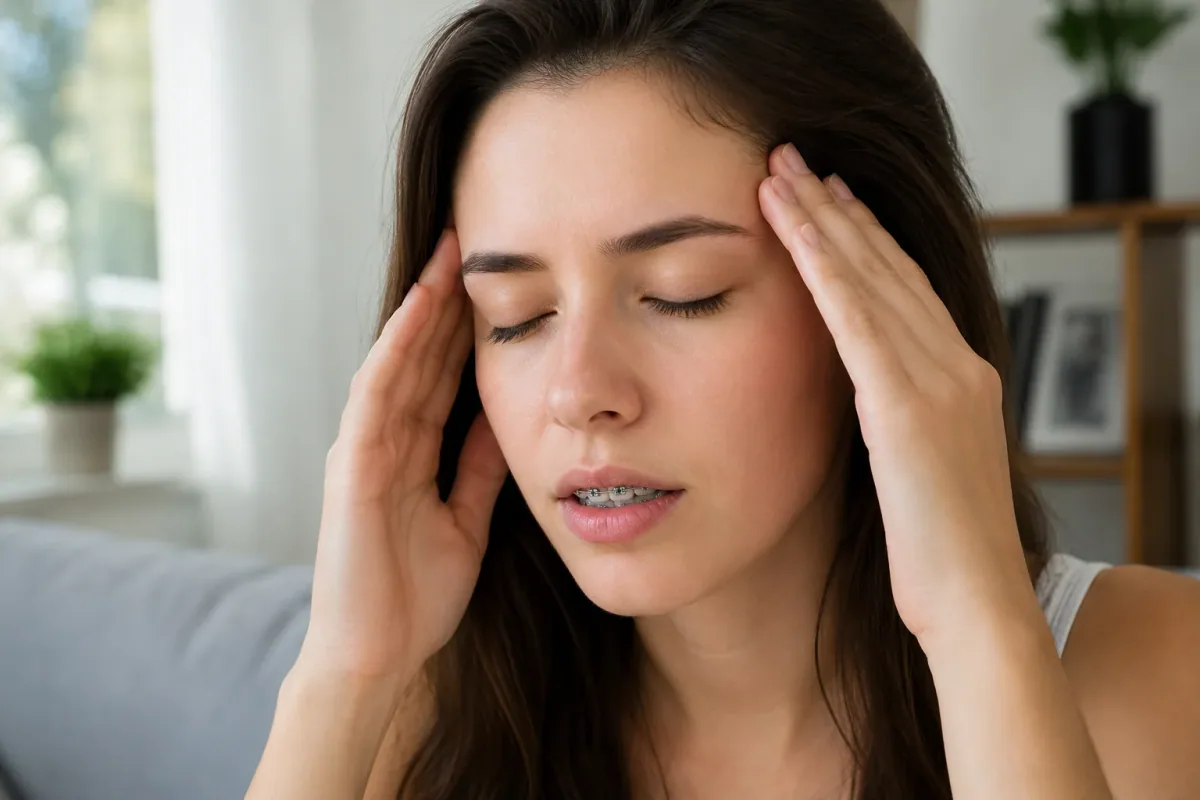
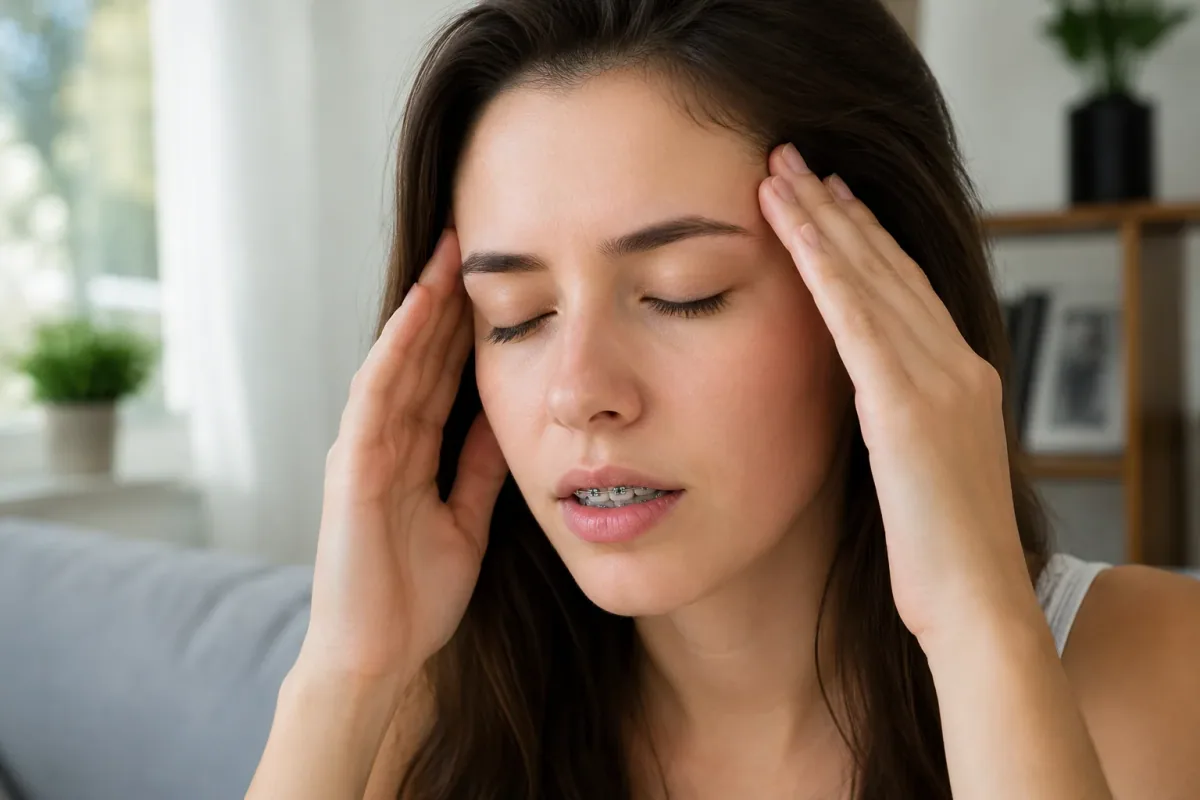
Can Braces Cause Headaches or Migraines? What to Expect
Yes, braces can cause headaches in the first few days after placement and after each adjustment. Queens orthodontist explains the pattern, when to call, and what helps.
- Dr. Boris Pinhasov, DDS
- May 9, 2026
- 11:00 am
Medically reviewed by Dr. Boris Pinhasov, DDS, Board-Certified Orthodontist (ABO Diplomate) | 15 Years of Experience | Last Updated: June 2026
Quick Answer
Yes, braces can cause headaches, especially in the first few days after placement and after each adjustment appointment. The headaches come from the pressure braces apply to teeth, the jaw muscles working to adapt to the new bite, and tension carried in the temples and neck. They are usually temporary, peaking 24 to 72 hours after each adjustment and easing as the muscles adjust. Headaches that persist for more than a week, or that come with severe jaw pain or limited jaw movement, may signal a TMJ issue and should be evaluated.
Braces work by applying continuous, gentle pressure to teeth so the bone supporting each tooth slowly remodels and the tooth moves to its new position. Patients feel that pressure as soreness in the teeth themselves, in the jaw muscles, and sometimes as a headache that radiates up into the temples or down into the neck. Most of the time, this is normal, expected, and short-lived. Occasionally it points to something that should be looked at.
This guide covers exactly when braces-related headaches are normal, when they are not, and the practical steps that ease them while your mouth adjusts.
Why Braces Can Trigger Headaches
Three interconnected mechanisms are usually responsible:
1. Direct pressure on the teeth. Each archwire and bracket applies steady force to move teeth through bone. The teeth themselves are sore, and that soreness can refer up into the upper jaw and the side of the head.
2. Jaw muscle adaptation. Your bite changes a little each time the wires are adjusted. The masseter, temporalis, and pterygoid muscles (the main muscles of chewing) work harder than usual to adapt. Tension in the temporalis muscle, which fans out across the side of the head, often presents as a headache in the temples.
3. Compensatory muscle tension. Many patients unconsciously clench or tense their neck and shoulder muscles in response to mouth discomfort. That referred tension shows up as tension headaches, especially at the base of the skull.
The same physiological principle applies to Invisalign. Per Dr. Pinhasov: “Invisalign, like other orthodontic treatments, applies pressure to the teeth, which can cause discomfort. In some cases, this discomfort may lead to headaches, but it’s usually temporary as the patient adjusts.” Braces apply that same pressure through a different delivery system, and they can trigger the same headache pattern.
When Headaches Are Normal vs. When to Call
The pattern matters. Normal braces headaches usually:
- Appear 12 to 24 hours after braces are placed or after an adjustment
- Peak between 24 and 72 hours, then ease over the following 4 to 7 days
- Respond to over-the-counter pain relievers (acetaminophen or ibuprofen, taken as directed)
- Are accompanied by general tooth and jaw soreness, not by sharp localized pain in one tooth
- Become less intense with each successive adjustment as your body adapts
Headaches that warrant a phone call to our office:
- Severe pain that does not respond to over-the-counter medication
- Pain that lasts more than 7 to 10 days after an adjustment
- Headaches accompanied by clicking, locking, or limited movement of the jaw
- Sharp, localized pain in one specific tooth (could indicate a different issue, like a loose bracket or a tooth requiring attention)
- Headaches that wake you up at night and are accompanied by waking with a tight or sore jaw (possible nighttime clenching or grinding)
The first three patterns above are not emergencies, but they are reasons to be seen sooner rather than waiting for the next routine appointment.
The TMJ Connection
Some patients arrive at orthodontic treatment with pre-existing temporomandibular joint (TMJ) issues. The jaw joint connects the lower jaw to the skull at a small disc, and dysfunction at that joint frequently presents as headaches, jaw pain, ear pain, or facial muscle soreness. When a patient with active TMJ symptoms starts braces, the existing pain pattern can intensify because the orthodontic forces are now adding to muscle work the joint was already struggling with.
Per Dr. Pinhasov: “Generally, we aim to resolve TMJ problems before starting orthodontic treatment. Braces might help with TMJ issues, but there’s no guarantee. Symptoms may persist even after treatment. In many cases, I refer patients to a TMJ specialist to evaluate and address any discomfort or pain before beginning orthodontic care.”
If you are experiencing headaches during braces treatment and you also have any of the following, mention it at your next appointment:
- Clicking or popping when you open or close your jaw
- Pain in front of the ear
- A jaw that locks open or closed
- Difficulty fully opening your mouth (less than the width of three fingers stacked together)
- Daily jaw fatigue, especially in the morning
These signs do not mean the braces are causing harm, but they do mean a TMJ evaluation is worth doing in parallel with orthodontic treatment.
What Helps in the First Few Days After Adjustment
For most patients, simple at-home steps shorten the headache window from a week to three or four days:
- Take over-the-counter pain medication on schedule. Ibuprofen (if your physician has cleared you to use it) reduces inflammation in addition to pain. Acetaminophen is fine for pain alone. Taking the medication on schedule for the first 48 hours, rather than waiting for pain to peak, prevents the worst of the headaches.
- Eat soft foods. Pasta, eggs, yogurt, smoothies, soup, mashed potatoes. Anything that requires hard chewing makes the muscles work harder and intensifies headaches.
- Use a cold compress on the side of your face. Cold reduces inflammation in the surrounding muscles. 15 minutes on, 15 minutes off, several times a day in the first 48 hours.
- Try saltwater rinses. Warm saltwater (one teaspoon of salt in a cup of warm water) soothes irritated soft tissue inside the mouth and can reduce overall inflammation.
- Get enough sleep. Sleep deprivation lowers pain tolerance and makes muscles tense up. Plan adjustments for days when you can rest in the evening if possible.
- Stay hydrated. Dehydration is a headache trigger on its own and worsens any other headache cause.
- Gentle jaw stretches and relaxation. Slowly opening and closing the mouth a few times an hour, and consciously relaxing the jaw and shoulders, prevents compensatory tension.
“Generally, we aim to resolve TMJ problems before starting orthodontic treatment. Braces might help with TMJ issues, but there’s no guarantee. Symptoms may persist even after treatment. In many cases, I refer patients to a TMJ specialist to evaluate and address any discomfort or pain before beginning orthodontic care.”
Dr. Boris Pinhasov, DDS, Board-Certified Orthodontist, BP Smiles Orthodontics
What About Migraine Patients?
For patients who already experience migraines, the pressure changes after a braces adjustment can occasionally trigger a migraine episode. This is more about adjustment-related stress and muscle tension than about the braces themselves causing the underlying migraine condition. If you are a migraine sufferer, a few practical adjustments help:
- Schedule braces adjustments away from the days you know you are most vulnerable to migraine triggers (high stress days, days after poor sleep, hormonal trigger windows)
- Coordinate with your neurologist or primary care physician about whether your usual migraine medication should be available during the first few days after each adjustment
- Track your migraines for the first one to two months of treatment to identify whether adjustments are an actual trigger for you (not all patients see a connection)
For most migraine patients, the braces themselves do not increase migraine frequency over the long term. The first few days after each adjustment are the higher-risk window.
When Headaches Mean Something Is Wrong With the Braces
Occasionally, headaches signal a mechanical issue rather than normal adaptation:
- A poking wire or loose bracket can cause sharp, localized pain that radiates up into the head. Visually inspect the braces in a mirror, and call our office if you find anything unusual.
- An archwire that has shifted out of position can apply uneven force and create unusual jaw muscle strain. This usually resolves with a quick repositioning visit.
- Severe bite imbalance caused by missing or significantly broken brackets can force the jaw to close incorrectly, triggering muscle headaches that do not match the usual adjustment timeline.
If a headache pattern feels different from previous adjustment headaches, or if the pain is sharply localized rather than diffuse, an in-office check is the right next step.
BP Smiles Orthodontics in Queens, NY
BP Smiles Orthodontics is located at 208-09 Union Turnpike, Queens NY 11364. Dr. Boris Pinhasov is a Board-Certified Orthodontist (ABO Diplomate), with more than 15 years of experience treating braces patients of all ages and complexity levels. Our patients come from Kew Gardens, Oakland Gardens, Bayside Hills, Flushing, Queens Village, and surrounding neighborhoods along Union Turnpike. Adjustments are scheduled every 4 to 6 weeks throughout treatment, and our team is available between appointments for any concerns including post-adjustment pain that lasts longer than expected. We offer interest-free in-house financing on every treatment, and our team speaks English, Russian, and Spanish.
If you are considering braces and want to talk through the comfort side of treatment in detail, or if you are mid-treatment and your headaches are not following the typical pattern, schedule a free consultation or call our office.
Or call 718-290-9444
How long do braces headaches usually last?
The pattern after each adjustment is consistent: discomfort starts within 12 to 24 hours, peaks between 24 and 72 hours, and resolves over the following 4 to 7 days. The first week after braces are first placed is typically the most intense window. Each subsequent adjustment is usually less intense than the one before as your body adapts.
Are braces headaches a sign that something is wrong?
Usually no. Mild to moderate headaches in the few days after braces placement or an adjustment are part of the normal adaptation process. Headaches that are severe, that last more than a week, or that come with jaw clicking, locking, or sharp localized tooth pain are reasons to be seen sooner.
Can I take ibuprofen for braces headaches?
For most patients, yes, taken as directed on the package. Ibuprofen reduces both pain and inflammation in the surrounding tissues. Confirm with your physician if you are unsure whether ibuprofen is appropriate for you, particularly if you are on other medications or have stomach or kidney concerns.
Do braces make migraines worse for migraine sufferers?
The first few days after each adjustment can occasionally trigger a migraine in patients already prone to them. Most patients do not see an increase in long-term migraine frequency. Tracking the first one to two months of treatment helps identify whether adjustments are a personal trigger.
Can braces fix headaches caused by a misaligned bite?
Sometimes. If chronic headaches are caused by a significant bite imbalance that strains the jaw muscles, correcting that bite with orthodontic treatment can reduce or eliminate the headaches over time. The connection should be evaluated by both an orthodontist and (if TMJ symptoms are involved) a TMJ specialist before assuming braces alone will resolve the headaches.
Should I see my orthodontist or my doctor for braces-related headaches?
For mild to moderate headaches in the days after an adjustment, the orthodontist is the right first contact. For severe, persistent, or unusual headaches, especially if accompanied by neurological symptoms (vision changes, numbness, severe nausea), see your primary care physician or seek medical evaluation. If a TMJ issue is suspected, a coordinated approach between an orthodontist and a TMJ specialist usually works best.
This information is provided for educational purposes and is not a substitute for professional medical advice, diagnosis, or treatment. Please schedule a consultation with our team to discuss your individual needs.
Ready to Start Your Smile Journey?
Schedule a free consultation with Dr. Boris Pinhasov in Queens.
FAQ
Frequently Asked Questions
The pattern after each adjustment is consistent: discomfort starts within 12 to 24 hours, peaks between 24 and 72 hours, and resolves over the following 4 to 7 days. The first week after braces are first placed is typically the most intense window. Each subsequent adjustment is usually less intense than the one before as your body adapts.
Usually no. Mild to moderate headaches in the few days after braces placement or an adjustment are part of the normal adaptation process. Headaches that are severe, that last more than a week, or that come with jaw clicking, locking, or sharp localized tooth pain are reasons to be seen sooner.
For most patients, yes, taken as directed on the package. Ibuprofen reduces both pain and inflammation in the surrounding tissues. Confirm with your physician if you are unsure whether ibuprofen is appropriate for you, particularly if you are on other medications or have stomach or kidney concerns.
The first few days after each adjustment can occasionally trigger a migraine in patients already prone to them. Most patients do not see an increase in long-term migraine frequency. Tracking the first one to two months of treatment helps identify whether adjustments are a personal trigger.
Sometimes. If chronic headaches are caused by a significant bite imbalance that strains the jaw muscles, correcting that bite with orthodontic treatment can reduce or eliminate the headaches over time. The connection should be evaluated by both an orthodontist and (if TMJ symptoms are involved) a TMJ specialist before assuming braces alone will resolve the headaches.
For mild to moderate headaches in the days after an adjustment, the orthodontist is the right first contact. For severe, persistent, or unusual headaches, especially if accompanied by neurological symptoms (vision changes, numbness, severe nausea), see your primary care physician or seek medical evaluation. If a TMJ issue is suspected, a coordinated approach between an orthodontist and a TMJ specialist usually works best.