
Reviewed by Dr. Boris Pinhasov, DDS – ABO Board-Certified Orthodontist | 20+ Years Experience | Last Updated: April 2026
Yes, you can get Invisalign if you have crowns or veneers. Clear aligners fit over dental restorations just as they fit over natural teeth, and teeth with crowns or veneers can be moved safely during treatment. Your orthodontist will evaluate your specific dental work to create a treatment plan that protects your restorations while straightening your smile.
Many adults considering Invisalign already have some dental work. Having crowns or veneers does not disqualify you from treatment. This guide explains how Invisalign works with different types of restorations and what you should know before starting.
How Does Invisalign Work With Dental Crowns?
Dental crowns are caps placed over damaged or weakened teeth. They cover the visible portion of the tooth but the natural root remains underneath. This is important because Invisalign moves teeth by applying pressure to the roots, not just the visible crowns.
Crowns move with the tooth. When you wear Invisalign aligners, the pressure moves the entire tooth, including the root. The crown stays attached and moves along with it. Your orthodontist designs aligners that fit precisely over crowned teeth just as they would over natural teeth.
Crowns must be secure before treatment. Your orthodontist will check that your crown is properly bonded and in good condition. If a crown is loose, damaged, or poorly fitted, it may need to be replaced before starting Invisalign. A secure crown handles the pressure of tooth movement without problems.
Attachments may be placed differently. Invisalign sometimes uses small tooth-colored attachments to help move teeth more effectively. These attachments bond better to natural tooth enamel than to crown materials. If attachments are needed near a crowned tooth, your orthodontist may place them on adjacent natural teeth instead.
The number and location of crowns matter. A single crown on a back tooth rarely affects treatment. Multiple crowns, especially on front teeth, require more careful planning. Your orthodontist accounts for all your dental work when designing your treatment.
If you also have fillings alongside crowns, you may want to read about getting orthodontic treatment with fillings as well.
How Does Invisalign Work With Veneers?
Veneers are thin shells bonded to the front surfaces of teeth to improve their appearance. Unlike crowns that cover the entire tooth, veneers only cover the front. Invisalign can work with veneers, but there are special considerations.
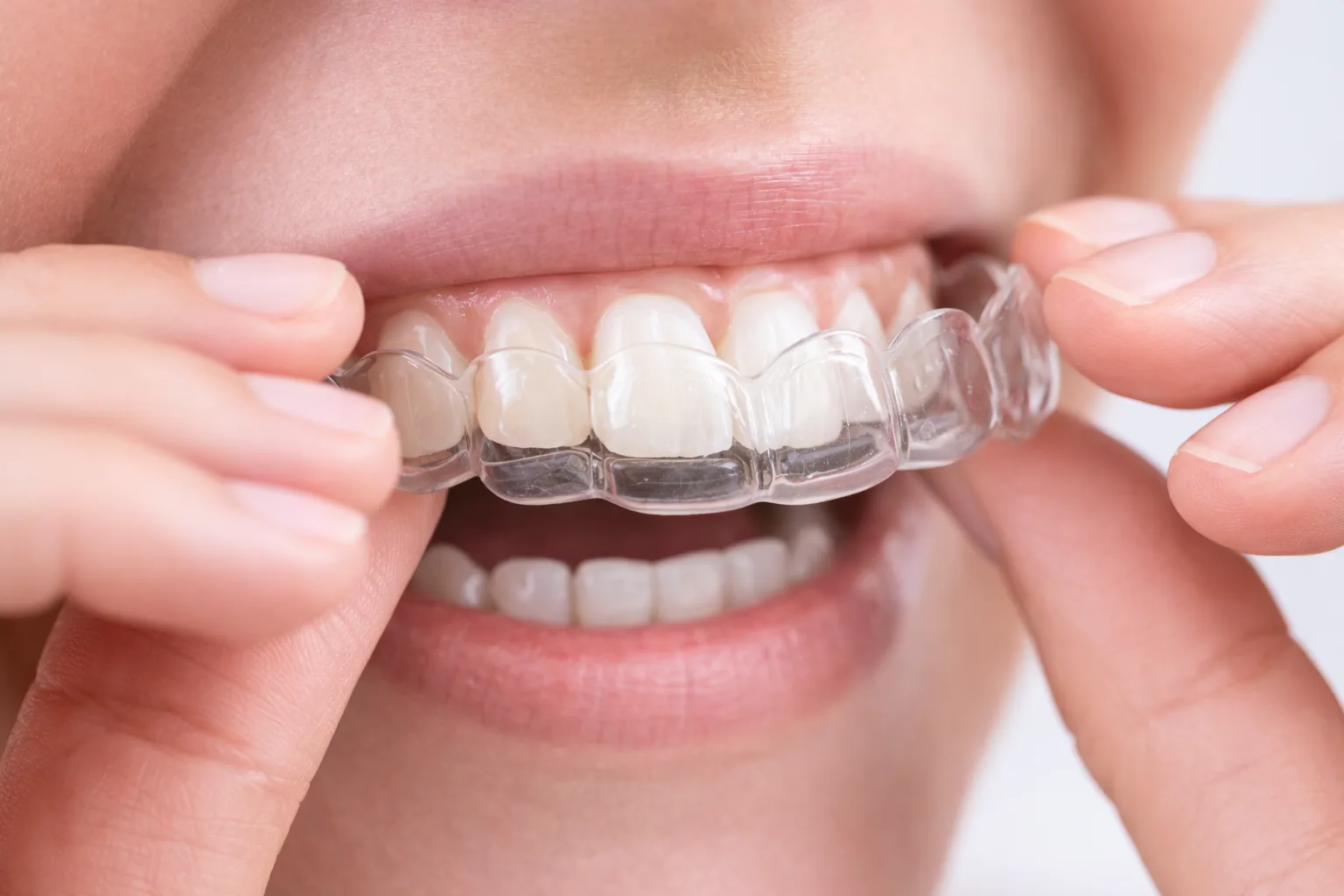
Aligners fit over veneers safely. The smooth plastic aligners do not scratch or damage properly bonded veneers. In fact, Invisalign is often preferred over braces for patients with veneers because there are no brackets to bond to the veneer surface.
Veneers must be in good condition. Before starting Invisalign, your orthodontist confirms that your veneers are securely bonded and structurally sound. Weak or poorly attached veneers could be damaged during treatment.
Attachments on veneered teeth require care. If your treatment plan requires attachments on teeth with veneers, your orthodontist uses special techniques to protect the veneer surface. In some cases, attachments are placed on nearby natural teeth instead.
Veneers cannot change the underlying tooth position. Veneers improve the appearance of teeth but do not correct alignment. If you have veneers but your teeth are still crooked underneath, Invisalign can straighten the actual tooth positions for a healthier bite.
Should I Get Invisalign Before or After Veneers?
If you are planning to get veneers in the future, the order of treatment matters.
Invisalign before veneers is usually the better choice. Straightening your teeth first means your veneers will be placed on properly aligned teeth. This often produces better aesthetic results and may even reduce the number of veneers you need. Once teeth are straight, veneers only need to address color, shape, or minor imperfections rather than compensating for crooked positions.
Placing veneers before Invisalign can create complications. If you get veneers first and later decide you want Invisalign, treatment is still possible but may be more complex. Moving veneered teeth requires extra care, and the veneers may need adjustment or replacement after your teeth shift.
Talk to both your dentist and orthodontist. If you are considering both veneers and Invisalign, consult with your providers together if possible. They can coordinate your treatment plan for the best overall result.
Some patients do Invisalign after veneers successfully. If you already have veneers and want straighter teeth, do not assume Invisalign is impossible. Many patients with existing veneers complete Invisalign treatment without any issues. The best way to find out is through a free consultation.
What Your Orthodontist Needs to Know
Being upfront about all your dental work helps your orthodontist create the best treatment plan.
Tell your orthodontist about every restoration. Mention all crowns, veneers, bridges, implants, and any other dental work during your consultation. Even restorations you received years ago are relevant.
Bring records if available. If you have documentation from previous dental work, such as when crowns or veneers were placed, share this information. It helps your orthodontist understand the materials used and the condition of your restorations.
Mention any problems with your dental work. If a crown feels loose, a veneer has chipped, or you have had any issues with your restorations, let your orthodontist know. These problems should be addressed before starting Invisalign.
Discuss your goals. Are you planning additional dental work in the future? Considering more veneers? Planning to replace old crowns? Sharing your overall dental goals helps your orthodontist factor these into your Invisalign treatment plan.
Can Invisalign Damage Crowns or Veneers?
When treatment is properly planned and supervised, Invisalign does not damage crowns or veneers.
Aligners apply gentle pressure. The force used to move teeth during Invisalign is gradual and controlled. Properly bonded crowns and veneers can handle this pressure without damage.
No bonding to the restoration surface. Unlike braces, Invisalign does not require bonding brackets directly to your teeth. This is an advantage for patients with veneers, as there is no risk of the veneer surface being damaged when brackets are removed.
Proper fit protects your dental work. Custom-made aligners fit precisely over your teeth, including any restorations. This snug fit distributes pressure evenly and avoids putting excessive force on any single tooth.
Professional supervision prevents problems. Your orthodontist monitors your treatment to ensure everything is progressing safely. If any concerns arise with your crowns or veneers during treatment, adjustments can be made. Learn more about how long Invisalign treatment typically takes.
Invisalign With Dental Work at BP Smiles Orthodontics
At BP Smiles Orthodontics in Queens, we regularly treat patients who have crowns, veneers, and other dental restorations.
Dr. Boris Pinhasov is an ABO board-certified orthodontist with over 20 years of experience. Board certification is achieved by fewer than one in three orthodontists, demonstrating commitment to the highest standards of care. As a certified Invisalign provider, Dr. Pinhasov has the expertise to plan treatment around your existing dental work.
During your free consultation, we use the Lumina Itero scanner to create a detailed 3D image of your teeth, including any restorations. This advanced technology allows us to see exactly how your crowns and veneers fit and plan your treatment accordingly.
“After the initial scan, we present a Clincheck which gives an accurate representation of treatment outcomes and expectations. You will see how your teeth will move and how your dental work will be protected throughout the process.”
– Dr. Boris Pinhasov, DDS, ABO Board-Certified Orthodontist
We coordinate with your general dentist if needed to ensure your restorations are in good condition before treatment begins. Our goal is a beautiful, straight smile that preserves the dental work you have already invested in.
With over 170 five-star Google reviews and a 5.0 rating, BP Smiles has earned the trust of families throughout Queens, Flushing, and Bayside.
Curious about costs? Read our guide on how much Invisalign costs in Queens. Ready to get started? Schedule your free consultation today to learn how Invisalign can work with your crowns or veneers.
Frequently Asked Questions
Can attachments damage my veneers?
When placed carefully by an experienced orthodontist, attachments should not damage veneers. Your orthodontist may choose to place attachments on adjacent natural teeth instead of directly on veneered teeth to avoid any risk.
What if I need a new crown during Invisalign treatment?
If a crown needs to be replaced during treatment, new aligners may be required to fit the new crown shape. Inform your orthodontist immediately if you need any dental work during Invisalign so adjustments can be made.
Can Invisalign fix a crown that looks crooked?
Invisalign moves the entire tooth, including the crown. If a crowned tooth is positioned crookedly, Invisalign can move it into better alignment. However, Invisalign cannot change the shape or appearance of the crown itself.
Will my veneers need to be replaced after Invisalign?
Not necessarily. If your veneers are in good condition and your teeth move as planned, your veneers may look even better on properly aligned teeth. In some cases, minor adjustments may be needed, but full replacement is not always required.
Is Invisalign or braces better if I have veneers?
Invisalign is often preferred for patients with veneers because no brackets are bonded to the tooth surface. Braces require bonding that can potentially damage veneers when brackets are removed. Discuss your options with your orthodontist during your consultation.
Medical Disclaimer: This article is for informational purposes only and is not a substitute for professional medical advice, diagnosis, or treatment. Always consult with a qualified healthcare provider regarding any medical concerns.
