
Medically reviewed by Dr. Boris Pinhasov, DDS – American Board of Orthodontics Diplomate | 20+ Years Experience | Last Updated: March 2026
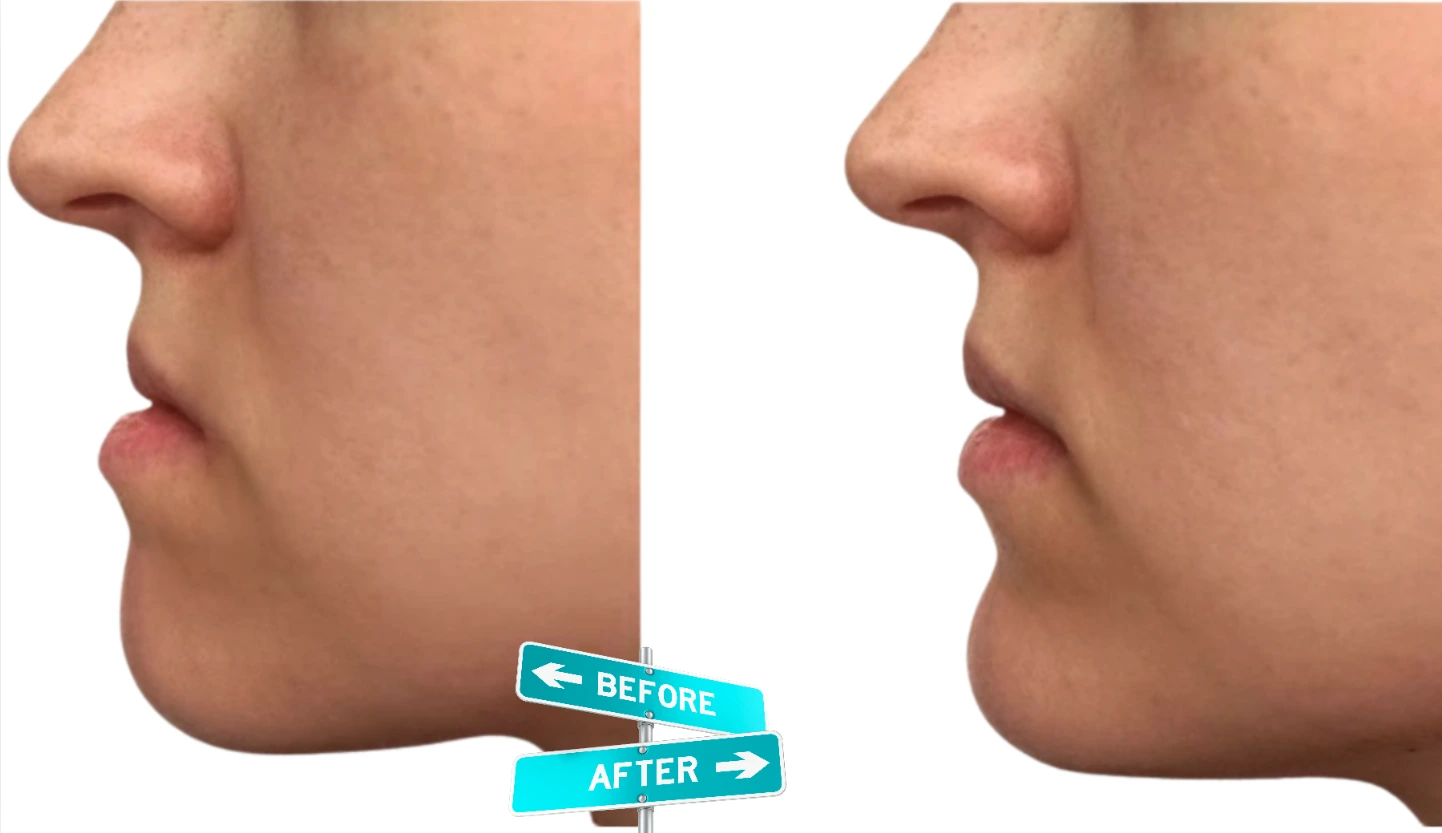
Yes, braces can improve your jawline by correcting bite problems that affect your facial profile. When braces fix an overbite, underbite, or other alignment issues, the position of your jaw shifts, which can create a more balanced and defined jawline. Many patients notice positive changes in their facial appearance after orthodontic treatment.
However, the degree of jawline change depends on the type and severity of your bite problem. Braces work by moving teeth and influencing jaw position, but they cannot reshape bone. Understanding what braces can and cannot do helps you set realistic expectations for your treatment.
How Braces Affect Your Jaw and Face
Braces do more than straighten teeth. By correcting how your upper and lower teeth fit together, braces change the position of your jaw, which directly affects your facial profile.
When teeth are misaligned, the jaw compensates by sitting in an unnatural position. This can make the chin appear recessed, the lower face look unbalanced, or the profile seem flat. Correcting the bite allows the jaw to rest in its proper position, often improving facial harmony.
Facial changes you may notice after braces:
A more defined jawline as the jaw moves into proper alignment. Improved chin projection if an overbite was pushing the lower jaw back. A more balanced profile when viewed from the side. Fuller or more proportionate lips as teeth move into correct position. Reduced appearance of a “weak chin” or protruding jaw.
These changes happen gradually over the course of treatment as your bite improves. Some patients see dramatic facial changes while others notice more subtle improvements.
Overbite Correction and Jawline Changes
An overbite occurs when the upper teeth significantly overlap the lower teeth. In many cases, an overbite makes the lower jaw appear recessed or the chin look weak.
How braces improve jawline with overbite:
When braces correct an overbite, the lower jaw is no longer pushed backward. As the bite improves, the lower jaw sits further forward in its natural position. This forward movement creates better chin projection and a more defined jawline. The profile becomes more balanced, with the chin appearing stronger.
What to expect:
Patients with moderate to severe overbites often see the most noticeable jawline improvements. The chin appears more prominent, and the side profile looks more balanced. These changes can be significant enough that friends and family notice the difference.
Overbite correction is one of the most common ways braces improve facial appearance, especially in teens whose jaws are still developing.
Underbite Correction and Jawline Changes
An underbite occurs when the lower teeth and jaw extend beyond the upper teeth. This makes the lower jaw appear overly prominent and the chin look like it protrudes too far.
How braces improve jawline with underbite:
Braces work to bring the lower teeth back and the upper teeth forward. As the bite corrects, the lower jaw no longer juts forward. The facial profile becomes more balanced with proper alignment between the upper and lower face. The chin appears proportionate rather than overly prominent.
What to expect:
Mild to moderate underbites can often be corrected with braces alone, resulting in a more harmonious facial profile. Severe underbites caused by skeletal jaw discrepancies may require jaw surgery in addition to braces for optimal results.
What Braces Cannot Fix
While braces can improve your jawline by correcting bite issues, they have limitations. Braces move teeth and influence jaw position, but they cannot physically reshape the jawbone.
Braces alone may not be enough when:
The jaw discrepancy is skeletal rather than dental. The upper or lower jaw is significantly oversized or undersized. The facial imbalance is caused by bone structure, not tooth position. You are an adult with fully developed jaw bones.
When jaw surgery may be needed:
Severe overbites or underbites caused by jaw size differences often require orthognathic (jaw) surgery. In these cases, braces are used before and after surgery to align the teeth, while surgery repositions the jawbone itself. This combination can create dramatic improvements in both function and facial appearance.
During your consultation, your orthodontist will evaluate whether your jawline concerns can be addressed with braces alone or if additional treatment may be needed.
Jawline Changes in Children and Teens vs. Adults
Age plays a significant role in how much braces can affect your jawline.
Children and teenagers:
Jaw bones are still growing and developing. Braces can influence jaw growth patterns, potentially guiding the jaw into a more favorable position. Early treatment can prevent jaw discrepancies from worsening. Facial changes from braces tend to be more significant because growth is ongoing.
Dr. Boris Pinhasov emphasizes that “7 is the golden number for getting evaluated for the first time by an orthodontist.” Early evaluation allows orthodontists to identify jaw issues while there is still time to influence growth.
Adults:
Jaw bones are fully developed and no longer growing. Braces can still improve jawline by correcting tooth position and bite. Changes are typically more subtle than in growing patients. Severe skeletal issues may require surgery to achieve significant jawline changes.
Adult patients can still see meaningful improvements in facial profile, but expectations should be calibrated based on the nature of the problem.
How Long Until You See Jawline Improvement?
Jawline changes from braces happen gradually as your bite improves over the course of treatment.
Timeline for visible changes:
- First 3 to 6 months: Early tooth movement begins, but jawline changes are usually not noticeable yet.
- 6 to 12 months: Some patients begin to notice subtle changes in their profile as significant tooth movement occurs.
- 12 to 18 months: More noticeable improvements in facial balance as bite correction progresses.
- 18 to 24 months: Full results become apparent as treatment nears completion and the bite is fully corrected.
- Treatment typically takes 12 to 24 months for most patients, though this varies based on the complexity of the case. Your orthodontist can give you a more specific timeline based on your individual treatment plan.
Will My Jawline Change After Braces Come Off?
Once braces are removed, your teeth and jaw will be in their corrected positions. Wearing your retainer as directed is essential to maintaining these results.
Maintaining your new jawline:
Your retainer keeps teeth from shifting back toward their original positions. Consistent retainer wear preserves the bite correction that improved your jawline. Without proper retention, teeth can relapse, potentially affecting jaw position.
The bone around your teeth needs time to stabilize after braces. Following your orthodontist’s retainer instructions ensures your jawline improvements are permanent.
Braces vs. Invisalign for Jawline Improvement
Both traditional braces and Invisalign can correct bite issues that affect your jawline. The choice between them depends on the type and severity of your bite problem.
Traditional braces:
More effective for complex bite corrections. Better for severe overbites, underbites, and jaw positioning issues. Provide more precise control over tooth movement. Often recommended when significant jawline change is desired.
Invisalign:
Effective for mild to moderate bite corrections. Works well for patients whose jawline concerns are related to tooth position rather than jaw position. May require attachments or rubber bands for bite correction. Less visible during treatment.
During your consultation, your orthodontist will recommend the option best suited to achieve your goals.
Transform Your Smile and Profile at BP Smiles
At BP Smiles Orthodontics, Dr. Boris Pinhasov helps patients achieve both beautiful smiles and improved facial balance through expert orthodontic care.
“Everyone deserves our best, all the time,” says Dr. Boris Pinhasov. “We evaluate not just tooth alignment but overall facial harmony to create results that look natural and balanced.”
Dr. Boris is a board-certified orthodontist and a Diplomate of the American Board of Orthodontics with 20 years of experience. He uses digital 3D scanning technology to analyze your bite and create a customized treatment plan designed to optimize both function and appearance.
BP Smiles has earned over 170 five-star Google reviews from patients throughout Queens who appreciate the thorough evaluations and outstanding results. Whether you are concerned about your bite, your profile, or both, Dr. Boris will explain exactly what braces can do for you.
Located at 208-09 Union Turnpike in Flushing, BP Smiles offers free consultations where you can discuss your jawline concerns and learn about your treatment options. Evening and Sunday appointments are available.
Frequently Asked Questions
Do braces make your face look different?
Yes, braces can change your facial appearance by correcting bite issues that affect jaw position. Many patients notice improvements in their profile, chin projection, and overall facial balance. The degree of change depends on the type of bite problem being corrected.
Can braces fix a weak chin?
Braces can improve the appearance of a weak chin if it is caused by an overbite pushing the lower jaw backward. By correcting the overbite, braces allow the jaw to move forward into its natural position, creating better chin projection. Severe skeletal issues may require surgery.
Will braces change my face shape?
Braces can affect your facial profile by changing jaw position, but they do not change the overall shape of your face. The changes are most noticeable in the lower third of the face, including the jawline and chin area.
How long does it take for braces to change your jawline?
Most patients begin noticing subtle profile changes after 6 to 12 months of treatment. Full results are typically visible by the end of treatment, which usually takes 12 to 24 months.
Can adults see jawline improvements from braces?
Yes, adults can see jawline improvements, though changes may be more subtle than in growing teenagers. Adult bones are fully developed, so braces primarily work by repositioning teeth. Significant skeletal changes in adults may require jaw surgery.
Disclaimer
Medically reviewed by Dr. Boris Pinhasov, Board-Certified Orthodontist.
This content is for educational purposes only and is not intended as medical advice, diagnosis, or treatment. Please consult a qualified healthcare provider for personalized recommendations.
