
Medically reviewed by Dr. Boris Pinhasov, DDS – American Board of Orthodontics Diplomate | 20+ Years Experience | Last Updated: March 2026
You can eat most foods with braces. Soft fruits, cooked vegetables, pasta, rice, soft bread, dairy products, eggs, tender meats, and seafood are all safe choices. The main foods to avoid are hard, sticky, and crunchy items that can break brackets or get stuck in wires.
Learning what to eat with braces does not have to be complicated. Most patients find they can still enjoy their favorite meals with a few simple adjustments. This guide covers everything you need to know about eating with braces, from safe food lists to answers about specific foods like pizza, chips, and candy.
Foods You Can Eat With Braces
The good news is that most foods are perfectly safe to eat with braces. Here is a comprehensive list of braces-friendly options:
- Fruits: Bananas, berries, grapes (cut in half), melons, applesauce, canned fruit, smoothies. Cut harder fruits like apples and pears into small pieces instead of biting into them.
- Vegetables: Steamed or cooked vegetables of all kinds, mashed potatoes, sweet potatoes, squash, beans, peas. Raw vegetables like carrots and celery should be cut into small pieces or cooked until soft.
- Grains and Starches: Pasta, rice, soft bread, pancakes, waffles, soft tortillas, oatmeal, soft cereals (avoid crunchy granola).
- Proteins: Tender chicken, fish, seafood, ground beef, meatballs, soft-cooked pork, eggs, tofu, beans, lunch meats.
- Dairy: Milk, yogurt, soft cheese, cottage cheese, pudding, ice cream (without hard mix-ins like nuts or candy pieces).
- Treats: Soft chocolate, milkshakes, smoothies, Jello, soft cookies, cake, pie (without hard crusts or nuts).
- Drinks: Water, milk, juice, smoothies, soft drinks (in moderation due to sugar content).
The key is choosing foods that do not require excessive force to bite or chew. If a food is soft enough to cut with a fork, it is usually safe for braces.
Foods to Avoid With Braces
Dr. Boris Pinhasov advises patients that “sticky, chewy, and hard foods cause breakage of appliances and should be avoided during treatment.” Damaged brackets mean extra appointments, delayed treatment, and additional discomfort.
- Hard Foods to Avoid: Hard candy, ice, nuts, popcorn kernels, hard pretzels, raw carrots (unless cut small), raw apples (unless sliced), corn on the cob, hard taco shells, crusty bread, bagels, hard pizza crust, croutons, hard cookies, jawbreakers.
- Sticky Foods to Avoid: Caramel, taffy, toffee, Starburst, gummy bears, gummy worms, licorice, fruit roll-ups, dried fruit, caramel apples, sticky candy of all kinds.
- Chewy Foods to Avoid: Bagels, licorice, beef jerky, tough meats, chewy bread, pizza crust (if very chewy), some energy bars.
- Crunchy Foods to Avoid: Popcorn, chips (most types), hard pretzels, hard tacos, ice, raw vegetables (unless cut small), crunchy granola.
- Other Items to Avoid: Chewing on pens, pencils, or fingernails. Biting into foods with your front teeth (always cut food and chew with back teeth).
When in doubt, ask yourself: Is this food hard enough to crack, sticky enough to pull, or crunchy enough to snap? If yes, skip it or find a softer alternative.
What to Eat the First Week After Getting Braces
The first week with braces is the most challenging for eating. Your teeth will be sore as they begin responding to the pressure from the brackets and wires. Stick to very soft foods during this adjustment period.
Best foods for the first week: Smoothies, yogurt, pudding, applesauce, mashed potatoes, scrambled eggs, soup (not too hot), oatmeal, soft pasta, macaroni and cheese, protein shakes, ice cream, Jello, soft bananas, avocado, hummus, soft bread.
Tips for the first week: Cut all food into very small pieces. Chew slowly and carefully using your back teeth. Avoid anything that requires biting with your front teeth. Drink plenty of water and cold beverages to soothe soreness.
Most patients find that eating becomes much easier after the first 5 to 7 days. The initial soreness fades, and you can gradually return to a more normal diet while still avoiding hard, sticky, and crunchy foods.
After adjustment appointments, you may experience similar soreness for 1 to 3 days. Plan to eat softer foods during these times as well.
Can You Eat Pizza With Braces?
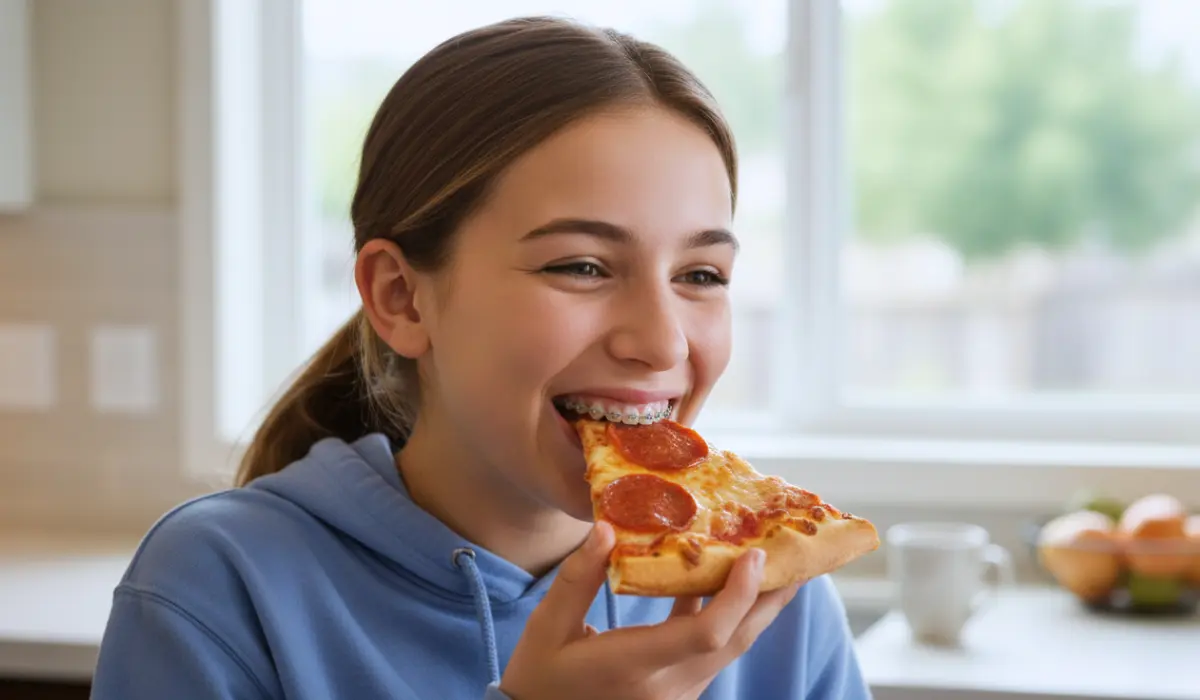
Yes, you can eat pizza with braces. Pizza is one of the most common foods patients ask about, and the good news is that it is usually safe.
- How to eat pizza with braces: Cut the pizza into small, bite-sized pieces instead of picking up a slice and biting into it. Avoid biting through thick, hard, or extra crispy crust with your front teeth. Chew with your back teeth.
- Pizza toppings to watch: Most toppings are fine. Be careful with very chewy meats like tough sausage or bacon. Avoid pizzas with hard toppings like nuts or raw vegetables.
- Crust considerations: Thin crust and regular crust are usually fine when cut into pieces. Thick, doughy crusts or very crispy crusts may be harder to chew. Stuffed crust is generally okay since it is soft inside.
If a restaurant serves pizza with an extremely hard or crunchy crust, leave the edges or ask for a softer option.
Can You Eat Chips With Braces?
Most chips should be avoided because they are crunchy and can break brackets. However, some softer chip options may be okay in moderation.
- Chips to avoid: Tortilla chips, hard potato chips, kettle-cooked chips, pita chips, veggie chips, any chip that makes a loud crunch when you bite it.
- Safer alternatives: Puffed snacks like Pirate’s Booty or cheese puffs are softer and less likely to damage braces. Baked chips that are thinner and softer may work for some patients. Always let chips dissolve slightly in your mouth before chewing.
- Why chips are risky: The crunching motion puts pressure on brackets and can pop them off. Small chip pieces can also get stuck between brackets and wires, making cleaning difficult.
If you love chips, consider switching to softer snack alternatives during treatment. Your braces will thank you.
Can You Eat Candy and Sweets With Braces?
Some candy is fine with braces, but many popular candies are off-limits.
- Candy you CAN eat: Soft chocolate bars (plain Hershey’s, Kit Kat wafers, Reese’s cups), peanut butter cups, soft cookies, cake, brownies, ice cream (without hard mix-ins), Jello, pudding.
- Candy you CANNOT eat: Hard candy (lollipops, Jolly Ranchers, Life Savers), sticky candy (caramel, taffy, Starburst, gummy bears, Milk Duds, Sugar Daddy), chewy candy (licorice, Twizzlers, Laffy Taffy, Tootsie Rolls), candy with nuts, candy bars with hard pieces (like Heath bars or Butterfinger).
- Halloween and holiday tips: Sort through candy and set aside anything hard, sticky, or chewy. Trade with friends or family members for soft chocolate options. Melt chocolate in your mouth rather than biting down hard.
Sugar is also a concern with braces because it can lead to cavities around brackets. Brush your teeth after eating sweets, or at least rinse with water if you cannot brush right away.
What Happens If You Eat Something You Should Not?
Eating the wrong foods can cause several problems that extend your treatment time and require extra appointments.
- Broken brackets: Hard and crunchy foods can pop brackets off your teeth. When a bracket breaks, your teeth stop moving properly until it is repaired. Each broken bracket means an extra appointment and potential delays in your treatment timeline.
- Bent wires: Biting into hard foods can bend your archwire. A bent wire cannot apply the proper pressure to move your teeth correctly.
- Food stuck in braces: Sticky and chewy foods get trapped between brackets and wires. This is difficult to clean and increases your risk of cavities and gum problems.
- Extended treatment time: If you frequently break brackets or bend wires, your overall treatment will take longer than planned. Every repair sets your progress back slightly.
If you do break a bracket or notice something wrong with your braces, contact your orthodontist. At BP Smiles, patients can call the office to schedule a repair appointment as soon as possible.
Tips for Eating With Braces
Follow these practical tips to make eating with braces easier and protect your orthodontic investment.
- Cut food into small pieces. Instead of biting into a whole apple or sandwich, cut everything into bite-sized pieces. This protects your front brackets and makes chewing easier.
- Chew with your back teeth. Your back teeth are stronger and not attached to brackets that can break. Use them to do the hard work of chewing.
- Take smaller bites. Oversized bites put extra pressure on your braces. Smaller bites are easier to manage and less likely to cause damage.
- Eat slowly. Rushing through meals increases the chance of biting down on something too hard. Take your time and pay attention to what you are eating.
- Avoid biting into foods with front teeth. Foods like corn on the cob, whole apples, and ribs require biting with front teeth. Either cut these foods off the bone or core, or avoid them entirely.
- Stay hydrated. Drinking water helps wash away food particles that get stuck in braces. Keep a water bottle handy during and after meals.
- Brush after every meal. Food gets trapped in braces easily. Brush your teeth after eating to prevent cavities and keep your braces clean.
- Carry a braces kit. Keep a small kit with a travel toothbrush, floss threaders, orthodontic wax, and a small mirror. You will be prepared to handle any food-related issues when eating away from home.
Braces-Friendly Eating at BP Smiles
At BP Smiles Orthodontics, we help patients navigate life with braces from day one. Dr. Boris Pinhasov and the team provide clear guidance on eating, oral hygiene, and everything else you need to know for a successful treatment.
“Everyone deserves our best, all the time,” says Dr. Boris Pinhasov. “We make sure every patient understands how to care for their braces so treatment stays on track.”
Dr. Boris is a board-certified orthodontist with 20 years of experience helping patients of all ages achieve beautiful smiles. As a Diplomate of the American Board of Orthodontics, he brings the highest level of expertise to every case.
BP Smiles has earned over 170 five-star Google reviews from families throughout Queens. Parents appreciate the clear instructions and friendly team that makes orthodontic treatment easy for the whole family.
Located at 208-09 Union Turnpike in Flushing, BP Smiles offers flexible scheduling including evening and Sunday appointments. Schedule your free consultation today to learn more about braces and what to expect during treatment.
Frequently Asked Questions
Can you chew gum with braces?
Sugar-free gum is generally okay in moderation, but sticky gum should be avoided. Some orthodontists prefer that patients skip gum entirely to avoid any risk of it getting stuck in braces. Ask your orthodontist for their specific recommendation.
Can you eat popcorn with braces?
Popcorn is one of the worst foods for braces. The kernels are hard and can break brackets, while the hulls get stuck between brackets and gums and are very difficult to remove. Avoid popcorn throughout your treatment.
Can you drink soda with braces?
You can drink soda, but do so in moderation. The sugar and acid in soda can cause cavities around your brackets. If you do drink soda, rinse your mouth with water afterward and brush your teeth when possible.
What if a bracket breaks while eating?
Contact your orthodontist to schedule a repair appointment. In the meantime, you can use orthodontic wax to cover any sharp edges. Avoid eating hard or sticky foods until the bracket is fixed.
How long do eating restrictions last?
You will need to avoid hard, sticky, and crunchy foods for the entire time you wear braces, typically 12 to 24 months. Once your braces come off, you can enjoy all your favorite foods again with no restrictions.
Disclaimer
Medically reviewed by Dr. Boris Pinhasov, Board-Certified Orthodontist.
This content is for educational purposes only and is not intended as medical advice, diagnosis, or treatment. Please consult a qualified healthcare provider for personalized recommendations.
